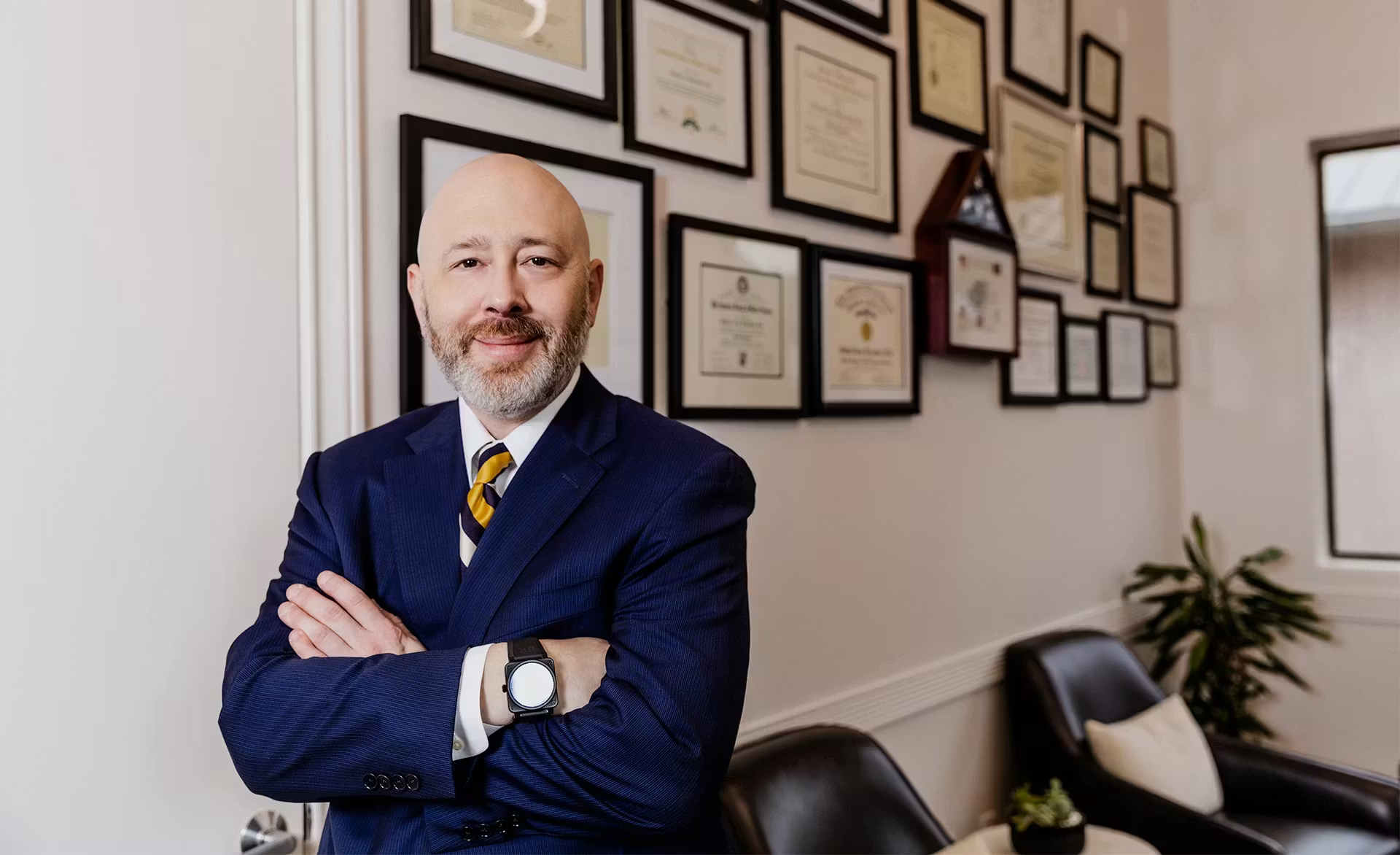

Date Published: 4/18/2026, Author: Dr Michael Baumholtz

When the Face No Longer Matches the Energy Behind It

Most people do not wake up one day and decide to have a facelift.

It happens gradually. The jawline softens. The neck loses definition. Skin that used to snap back after a long week no longer does. For some, the change comes with age - the slow accumulation of gravity, sun exposure, and time. For others, it arrives faster - after significant weight loss, after illness, or after a period of high stress that seems to have added years in months.

The person looking back in the mirror does not match the person they feel themselves to be.

That disconnect - between energy and appearance - is often what brings patients to a consultation. Not vanity. Not chasing youth. A desire to look the way they feel.

Facelift surgery in San Antonio is one of the most searched and discussed cosmetic procedures today. And in 2026, more patients than ever are asking better questions. Not just "can I have a facelift?" but "which technique is right for me?" and "what actually drives a good result?"

Those are the right questions.

At Baumholtz Plastic Surgery in San Antonio, Dr. Michael Baumholtz approaches facial rejuvenation the way it should be approached - by matching the technique to the patient's anatomy, not by following a trend. That means understanding what the deep plane facelift is, when it is the right tool, and when a different combination of techniques produces an equally excellent - or better - outcome.

This article explains all of it.

Ready for Surgery? Take Dr Baumholtz Breast Surgery Quiz

Understanding the Anatomy of Facial Aging

Before any technique makes sense, the anatomy has to make sense.

The face ages in layers - and understanding those layers is what separates a natural result from one that looks operated on.

✓ The Skin

The outermost layer. Skin loses elasticity over time, thins with sun exposure, and eventually cannot hold position without support from below. Pulling skin alone - what older facelift techniques did - creates the stretched, "done" look patients fear most. Skin tension is not the foundation of a good facelift. It is the finishing layer.

✓ The SMAS - Superficial Musculoaponeurotic System

The SMAS is a fibromuscular layer that sits beneath the skin and above the deeper structures of the face. Think of it as a connected sheet that links facial muscles and supports the overlying tissue. When the SMAS sags, the face sags. Lifting and repositioning the SMAS - rather than just pulling the skin - is what produces results that look natural and last.

This layer is central to most modern facelift techniques. The difference between techniques is largely about how deep the dissection goes and how the SMAS is manipulated.

✓ The Deep Plane

Below the SMAS lies the deep plane - a tissue level that includes the retaining ligaments of the face. These ligaments anchor the facial soft tissues to the underlying bone. Over time, they stretch. The nasolabial folds deepen. The cheeks descend. Jowls form.

A deep plane facelift releases these ligaments, allowing the surgeon to reposition the deeper tissues of the face - not just tighten what is above them. This can produce exceptional results in the right patient.

✓ The Neck

The neck is its own anatomy - and it ages differently than the face. The platysma is a broad, flat muscle that runs from the chest up through the neck. Over time, the platysma bands - vertical cords in the neck - become visible. The neck skin loosens. Fat accumulates beneath the chin.

A comprehensive plan for facial rejuvenation cannot ignore the neck. In many patients, the neck is where the most visible aging has occurred.

What Causes the Face and Neck to Age - and What Accelerates It

Facial aging is not one process. It is several happening simultaneously.

  • Volume loss: Fat compartments of the face shrink and shift downward with age.
  • Ligament laxity: The anchoring structures of the face gradually loosen.
  • Skin quality changes: Sun exposure, genetics, and lifestyle affect skin thickness and elasticity.
  • Muscle changes: The platysma loosens in the neck. The deeper muscles of the face shift.
  • Bone remodeling: The underlying facial skeleton changes shape subtly over decades.

Some factors accelerate this process significantly:

  • Significant weight loss - whether from lifestyle changes, bariatric surgery, or GLP-1 medications - can cause rapid loss of facial volume and skin laxity that far exceeds what chronological aging alone would produce.
  • Chronic sun exposure - especially relevant in South Texas, where UV intensity is high year-round.
  • Smoking and nicotine use - which impair circulation and accelerate skin breakdown.
  • Genetics - some families age earlier or more dramatically in specific areas.

Understanding what caused the aging is part of planning the correction. A patient who has lost 80 pounds has different tissue dynamics than a patient whose aging is purely chronological. The surgical plan must account for that.

Facelift Techniques: What They Are and What They Actually Do

"Facelift" is not one operation. It is a category of procedures. The technique chosen determines what is moved, how far it moves, and how long it stays there.

✓ Traditional Skin-Only Facelift (No Longer the Standard)

Older facelift techniques focused primarily on excising skin and pulling what remained tighter. The results were often short-lived and frequently produced the telltale "operated" appearance - tightened skin, distorted hairline, and pulled features. This approach has largely been replaced by SMAS-based techniques.

✓ SMAS Facelift

The SMAS facelift involves lifting and repositioning the SMAS layer - the fibromuscular sheet beneath the skin - while also managing the overlying skin separately. This allows the surgeon to create support from a structural layer rather than relying on skin tension alone.

Results are more natural and longer-lasting than skin-only approaches. The SMAS can be addressed in various ways - imbricated (folded), plicated (sutured in place), or partially elevated - depending on the anatomy and the degree of correction needed.

✓ Deep Plane Facelift

The deep plane facelift goes deeper. It releases the facial retaining ligaments and elevates the SMAS and overlying soft tissues together as a single unit. Because the ligaments are released, the tissues can be repositioned more completely, particularly in the midface and nasolabial fold area.

This technique is genuinely powerful - especially for patients with significant midface descent or deep nasolabial folds. It is not a marketing term. It is a distinct anatomic approach with specific indications.

It also requires specific expertise and carries specific considerations. Not every patient needs it. Not every surgeon trained to perform it should recommend it for every case.

✓ Preservation Facelift

Preservation facelift is a newer concept that emphasizes maintaining native anatomic relationships - releasing ligaments and repositioning tissue while preserving as much of the natural fat compartment architecture as possible. The goal is movement without distortion.

It shares principles with the deep plane approach but places additional emphasis on what is left intact rather than only on what is released.

✓  Neck Lift - A Separate but Related Operation

The neck lift addresses the platysma muscle, neck bands, skin laxity, and submental fat beneath the chin. It can be performed alone or in combination with facelift surgery. In many patients, the neck contributes more to the appearance of aging than the face itself - and addressing it creates dramatic improvement.

A neck lift performed at the deep plane level - releasing the deep cervical structures and repositioning the platysma comprehensively - can produce exceptional neck definition even when the facial component is addressed with an SMAS technique.

Dr. Baumholtz's Approach: Why Deep Plane Neck Plus SMAS Face Is Often the Right Answer

Here is the honest clinical reality:

The deep plane facelift is an excellent technique. It is also not always necessary for every patient - and the assumption that deeper always means better is not supported by the evidence or by surgical experience.

Dr. Baumholtz's preferred approach for many patients combines two well-established techniques:

  • A deep plane neck lift - addressing the deeper cervical structures, platysma, and submental area comprehensively.
  • An SMAS-based facelift - repositioning the facial soft tissues through the SMAS layer with appropriate skin management.

Why this combination works:

✓ The Neck Is Often Where the Aging Is Most Visible

For a significant number of facelift patients, the neck - turkey neck, visible platysma bands, jowling, loss of the cervicomental angle - is the primary complaint. Going deep in the neck, releasing the appropriate structures, and creating real support there produces transformative results.

A superficial neck treatment combined with a comprehensive facelift often under-delivers on the neck. Addressing the neck at the deeper plane while managing the face through the SMAS layer frequently achieves excellent balance.

✓ SMAS Technique Is Not a Compromise

A well-executed SMAS facelift is not a lesser procedure. It addresses the structural layer of the face, repositions tissue with vectors appropriate to the anatomy, and produces natural, durable results. The idea that every facelift patient requires full deep plane dissection of the face to get a good result is simply not accurate.

Technique must match anatomy. Some patients - those with significant midface descent, deep nasolabial folds, or specific tissue characteristics - benefit from a full deep plane approach to the face. Others achieve excellent results through the SMAS layer without the additional dissection.

✓ Combining Techniques Is Not a Compromise - It Is Precision

The best facelift is not always the deepest facelift. It is the facelift that addresses what actually needs to be addressed in each patient's anatomy.

Dr. Baumholtz evaluates each patient as an individual. The consultation process includes assessment of skin quality, tissue thickness, degree of ptosis (drooping), anatomic landmarks, and the patient's goals. The plan is built from that evaluation - not from a one-size-fits-all technique.

Who Is a Good Candidate for Facelift Surgery in San Antonio

Facelift surgery is appropriate for patients who have visible facial aging that bothers them and who are healthy enough to undergo surgery safely.

Good candidates typically include:

  • Men and women with jowling - loose skin along the jawline that blurs the jaw definition.
  • Patients with visible neck bands (platysma bands) or "turkey neck" - skin and muscle laxity in the neck.
  • Those with significant descent of the midface and deepening of the nasolabial folds.
  • Patients who have lost significant weight - whether from lifestyle change, bariatric surgery, or GLP-1 medications - and whose skin has not retracted.
  • Men and women in their 40s, 50s, 60s, and 70s who feel their appearance does not reflect their energy or identity.
  • Patients with good general health, realistic expectations, and a clear understanding of what surgery can and cannot do.

Facelift surgery is not the right choice for everyone. Patients who are medically unstable, who smoke or use nicotine products without plans to stop, who have unrealistic expectations, or who are seeking perfection rather than improvement are not appropriate surgical candidates.

Non-surgical treatments - fillers, biostimulators, energy-based devices - can address early aging or complement surgical results. They cannot replicate what surgery achieves in patients with significant tissue laxity. The conversation should be honest about this distinction.

What Facelift Surgery Can Do - and What It Cannot

✓ What It Can Do

  • Reposition descended soft tissues of the face and neck.
  • Restore jawline definition and reduce jowling.
  • Improve neck contour - including bands, skin laxity, and submental fullness when combined with neck procedures.
  • Reduce the depth of nasolabial folds when midface tissues are repositioned.
  • Produce results that are natural in appearance and durable over time.
  • Turn back the visible clock by a meaningful amount - without making a patient look like someone else.

✓ What It Cannot Do

  • Change bone structure or jaw shape.
  • Eliminate all lines and wrinkles - some are intrinsic to the skin and require separate treatment.
  • Replace volume that has been lost - fat grafting or fillers address volume; a facelift addresses position.
  • Produce permanent results - aging continues after surgery, though from a more favorable baseline.
  • Correct skin quality issues like texture, pigmentation, or sun damage - those require skin care and energy-based treatments.
  • Make someone look 25 years younger - or like someone other than themselves.

The Surgical Plan: What the Operation Actually Involves

Every facelift plan at Baumholtz Plastic Surgery is developed after a thorough in-person consultation. The following describes the general elements of the procedure for most patients.

✓ Anesthesia

Facelift surgery is performed under general anesthesia in an accredited surgical facility. Patient safety and comfort are the priority from start to finish.

✓ Incision Placement

Incisions are placed in locations designed to minimize visibility. Standard facelift incisions run along the natural contours in front of and behind the ear, into the hairline. Neck incisions, when needed, are placed beneath the chin in a natural skin crease.

Incision placement is chosen to allow adequate access for the planned dissection while keeping scars as inconspicuous as possible.

✓ The SMAS Dissection and Lift

The SMAS layer is identified, elevated, and repositioned. This provides structural support that lasts - the skin is not responsible for holding the result. The SMAS is advanced in vectors appropriate to each patient's anatomy.

✓ The Deep Plane Neck Lift

In the neck, dissection proceeds beneath the platysma muscle. Platysma bands are addressed directly. The submental area - beneath the chin - is treated to improve the neck-chin angle. When appropriate, fat beneath the platysma is carefully managed. This level of neck work produces the clean, defined neck contour that patients want.

✓ Skin Management

Once the deeper layers are repositioned, excess skin is trimmed and closed with fine sutures. Because the structural layers are doing the work, the skin closes without tension - which is what allows scars to heal well.

✓ Drains

Dr. Baumholtz uses surgical drains following facelift and neck lift surgery. Drains manage fluid accumulation in the early recovery period and reduce the risk of complications. They are typically removed at the first follow-up visit.

Recovery After Facelift Surgery: A Realistic Timeline

Recovery from facelift surgery is a process. Understanding what to expect - and what not to expect - reduces anxiety and protects the result.

- The First 48–72 Hours

Most patients go home the day of surgery or the following morning. A compression garment supports the neck and face. Drains manage fluid. The priorities are rest, hydration, and keeping the head elevated.

Swelling and bruising are significant at this stage. They are expected. They do not predict the final result.

- Week One

Swelling peaks in the first few days and begins to improve. Bruising shifts and fades. Most patients feel surprisingly functional within a week - but "functional" does not mean "presentable." Most patients prefer to stay home during week one.

Drain removal typically happens at the first follow-up visit. Sutures are removed over the first one to two weeks depending on placement.

- Weeks Two and Three

Swelling continues to improve. Bruising resolves for most patients. Many patients feel comfortable appearing in public with minimal makeup by the end of week two, though individual variation is significant.

Energy returns gradually. Light activity is permitted. Strenuous activity waits.

- One to Three Months

The result begins to declare itself. Tissues settle. Swelling in deeper structures resolves. The jawline, neck, and midface take shape.

This is also when scar management becomes active.

- Six Months to One Year

The final result is visible. Scars continue to mature. Most patients feel the result looks its best around six to twelve months after surgery, when all swelling has resolved and tissues have fully settled.

Facelift Scars: What to Expect and How to Manage Them

Every facelift leaves scars. The goal is scars that are inconspicuous - placed in natural shadows, along hairlines, and in creases where they fade effectively.

Scar management begins once incisions are fully sealed and healed - typically two to four weeks after surgery. The standard protocol at Baumholtz Plastic Surgery includes:

  • Silicone gel or silicone tape - applied daily to reduce scar thickness and redness.
  • Gentle scar massage - when cleared by Dr. Baumholtz, to soften underlying tissue.
  • Strict sun protection - new scars darken with UV exposure and can remain darker permanently if not protected. In San Antonio's sun, this is not optional.
  • Clothing coverage - protecting scars from friction and UV during the healing phase.

Scars from facelift surgery mature over approximately twelve months. Patience is part of the process. Scars that look pink and visible at six weeks often become nearly imperceptible by one year.

Risks and Honest Tradeoffs

Facelift surgery is safe in the hands of an experienced, board-certified plastic surgeon operating in an accredited facility. It is also surgery - and surgery carries risk.

Risks of facelift surgery include:

  • Hematoma - blood collection beneath the skin. The most common early complication. Managed surgically when it occurs.
  • Nerve injury - temporary numbness is common. Permanent motor nerve injury is rare.
  • Infection - uncommon, managed with antibiotics when it occurs.
  • Wound healing problems - particularly in patients with compromised circulation, which is why nicotine cessation is non-negotiable.
  • Scarring - visible scars can occur. Proper technique and aftercare minimize this risk.
  • Asymmetry - some degree of natural asymmetry is present in all faces. Surgery cannot guarantee perfect symmetry.
  • Unsatisfactory result or need for revision - revision surgery is sometimes appropriate and is discussed honestly when relevant.

Risk is minimized through careful patient selection, thorough preoperative planning, skilled surgical execution, and attentive postoperative care. It is not eliminated.

Long-Term Outcomes: How Long Does a Facelift Last

A well-performed facelift does not stop the clock. It turns it back.

Most patients enjoy their facelift results for seven to twelve years before they feel aging has caught up significantly. Factors that influence longevity include:

  • Technique - SMAS and deep plane techniques last longer than skin-only approaches.
  • Tissue quality - patients with good skin elasticity tend to hold results longer.
  • Sun protection - ongoing UV protection preserves skin quality and prolongs results.
  • Weight stability - significant weight changes after surgery affect facial volume and can alter results.
  • Nicotine avoidance - continued smoking after surgery accelerates the aging process.

Secondary facelift surgery - a revision or repeat procedure - is an option for appropriate candidates years after the initial operation. The conversation about realistic expectations includes the honest acknowledgment that surgery provides rejuvenation, not permanence.

Frequently Asked Questions About Facelift Surgery in San Antonio

Am I too young for a facelift?

There is no minimum age - there is an appropriate anatomy. Patients in their early 40s with significant jowling or neck laxity can be excellent candidates. Many younger patients in 2026 are choosing earlier intervention to address changes before they become more pronounced.

Am I too old for a facelift?

Age alone is not a disqualifier. General health, anesthesia tolerance, and tissue quality matter more than the number. Patients in their 70s in good health can be excellent surgical candidates. An honest preoperative medical evaluation determines safety.

Do I need a full deep plane facelift?

Not necessarily. The deep plane facelift is a powerful technique with specific indications. Many patients achieve excellent, natural, long-lasting results with an SMAS facelift. The right technique depends on the individual anatomy - not on which approach is currently trending.

What is the difference between a facelift and a neck lift?

A facelift addresses the lower face, jowls, and midface. A neck lift addresses the neck - bands, skin laxity, and contour beneath the chin. They are often performed together, and the combination frequently produces the most comprehensive result. They can also be performed separately depending on where the primary aging has occurred.

Will I look natural after a facelift?

A well-performed facelift should make a patient look refreshed and rested - not operated on. The goal is repositioning tissue to where it was before, not creating a new face. Patients who look “done” are usually the result of excessive skin tension, over-correction, or techniques that do not respect the native anatomy.

How much does a facelift cost in San Antonio?

Facelift cost depends on the scope of the procedure, operating room and anesthesia fees, and what is included in preoperative and postoperative care. A detailed cost breakdown is provided after consultation. Financing options are available.

How long will I be out of work?

Most desk-work patients return to work within ten to fourteen days. Patients in physically demanding jobs or those who cannot appear publicly with visible bruising or swelling may need two to three weeks. Each patient’s timeline is discussed individually based on the planned procedure.

Can I combine a facelift with other procedures?

Yes - brow lift, eyelid surgery (blepharoplasty), and fat grafting are commonly combined with facelift surgery. Combining procedures must be done thoughtfully, with operative time and physiologic load in mind. Some combinations are appropriate in one stage; others are safer and more predictable when staged.

What causes the "wind-tunnel" or "pulled" look?

That appearance results from excessive skin tension, incorrect vector of pull, or techniques that rely on skin rather than deep tissue for support. A properly performed SMAS or deep plane facelift does not produce that result. Choosing an experienced, board-certified plastic surgeon significantly reduces this risk.

I lost a lot of weight - am I a candidate?

Weight loss - including from GLP-1 medications, bariatric surgery, or lifestyle change - is increasingly common among facelift patients. Rapid or significant weight loss often produces facial deflation and skin laxity that responds well to surgical rejuvenation. Weight should be stable for at least six months before surgery.

Will a facelift fix my nasolabial folds?

A midface lift or deep plane approach can improve nasolabial folds by repositioning descended cheek tissue. However, folds are also influenced by volume loss - and volume loss is addressed by fat grafting or fillers, not by lifting alone. The plan may include both elements.

Does a facelift fix my neck?

A facelift addresses the lower face. The neck requires its own component - either a separate neck lift or a combined approach. Most facelift plans at Baumholtz Plastic Surgery include neck treatment, because addressing the face without the neck often produces an incomplete result.

How is a male facelift different?

Male facelift surgery follows the same anatomic principles but requires different incision planning to respect beard-growing skin and hairline patterns. Sideburn position must be preserved. The aesthetic goal is typically a defined, masculine result - not feminization. Men are increasingly seeking facial rejuvenation and are excellent candidates for the right approach.

What is recovery like for someone who had a lot of weight loss?

Post-weight-loss facelift patients often have thinner, less elastic skin and reduced facial fat. Recovery is generally similar, but the surgical plan may account for tissue characteristics that differ from standard chronological aging. The consultation addresses this in detail.

Can I combine a facelift with a rhinoplasty?

It is technically possible, but combining two major facial procedures in one session significantly increases operative time. A staged approach is often more appropriate and allows each procedure the recovery time it deserves for optimal results.

What is a mini facelift?

A mini facelift uses shorter incisions and addresses a more limited area - typically early jowling with minimal neck involvement. It is appropriate for patients with early aging who do not require a full SMAS or deep plane approach. It is not a shortcut to the same result - it is a different operation for a different patient.

Will I need a second facelift someday?

Aging continues after facelift surgery. Many patients choose a secondary procedure years later to address new aging. A well-performed facelift creates a favorable baseline - secondary procedures are typically less extensive than the primary.

How do I prepare for facelift surgery?

Preparation includes stopping nicotine products a minimum of four to six weeks before surgery, stabilizing any underlying medical conditions, stopping blood-thinning supplements and medications as directed, arranging home support for at least the first week, and establishing realistic expectations through thorough consultation.

Does nicotine really matter that much?

Yes. Nicotine - including cigarettes, vaping, THC, and nicotine patches - constricts blood vessels and reduces circulation to healing tissues. In facelift surgery, where large skin flaps depend on adequate blood flow, nicotine use significantly increases the risk of wound breakdown, skin loss, and poor scarring. It is not a preference - it is a non-negotiable safety requirement.

What happens at the consultation?

The consultation includes a thorough facial assessment, review of medical history, discussion of goals and expectations, explanation of technique options, review of realistic outcomes, and a detailed review of risks and recovery. Patients leave with a clear understanding of the proposed plan and what to expect.

How is facelift different from filler?

Fillers add volume to the face. A facelift repositions tissue that has descended. They solve different problems. Fillers are appropriate for volume loss and early aging; a facelift is appropriate for significant tissue laxity and descent. Many patients benefit from both - at different times or together.

What if I am not ready for surgery yet?

That is a legitimate choice. Non-surgical treatments - biostimulators, fillers, energy-based skin tightening - can be appropriate for patients in earlier stages of aging or those not yet ready for surgery. The consultation will address all options honestly.

Can a facelift be reversed?

No. Surgery is permanent. This is why careful patient selection, thorough consultation, and realistic expectations are critical. Choosing the right surgeon and understanding the plan before proceeding is the most important decision a patient makes.

How do I know if I am a good candidate?

The only way to know is through an in-person consultation. Photos and general guidelines can suggest candidacy, but tissue quality, anatomy, and health history must be assessed in person to build an accurate plan.

How does San Antonio's climate affect recovery?

South Texas heat and sun are relevant to facelift recovery. UV protection is critical for new scars - sun exposure can permanently darken healing incisions. Breathable fabrics, loose clothing, and strict sunscreen application during the healing phase are emphasized in the postoperative plan.

What makes Dr. Baumholtz's approach different from other surgeons?

Dr. Baumholtz does not apply one technique to every patient. The approach - deep plane neck lift combined with SMAS facelift when appropriate, or a full deep plane approach when anatomy demands it - is selected based on individual assessment. The goal is a natural, lasting result that fits the patient, not a technique that fits a marketing narrative.

Is the deep plane facelift always better?

No. The deep plane facelift is an excellent technique with specific indications. It is not universally superior to an SMAS approach for every patient. Technique matching is what produces consistently excellent results - not defaulting to the deepest available dissection regardless of anatomy.

What does a "preservation" facelift mean?

Preservation facelift emphasizes maintaining native anatomic fat compartments and tissue relationships while releasing ligaments and repositioning descended structures. It is a philosophy of movement without distortion. These principles inform Dr. Baumholtz’s approach - the specific technique used depends on the anatomy.

Do men need different incisions?

Yes. Male facelift incisions must preserve the beard-skin hairline and avoid distorting the sideburn. The planning accounts for these anatomic differences. Results in men, when planned correctly, are natural and masculine - not feminized.

Where can I see before and after photos?

Before and after photos are available at consultation and through the Baumholtz Plastic Surgery website gallery. Viewing results in patients with similar anatomy and goals is one of the most useful steps in evaluating whether a surgeon’s aesthetic aligns with what you are looking for.

Medical References

Reasons to Choose Dr. Baumholtz for Facelift Surgery in San Antonio

  • Board-certified plastic surgeon with fellowship training - not a general surgeon performing aesthetic procedures.
  • Technique is matched to anatomy - not applied uniformly to every patient regardless of need.
  • Preferred approach of deep plane neck lift combined with SMAS facelift delivers comprehensive rejuvenation of both the face and neck without over-treating either.
  • Full deep plane facelift is available and performed when anatomy demands it.
  • Surgical drains are used for facelift and neck lift - a meaningful safety and outcome measure.
  • Thorough consultation process - patients understand the plan, the risks, and the realistic outcomes before proceeding.
  • Private practice model - Dr. Baumholtz performs the surgery himself, evaluates patients personally, and is available for follow-up.
  • Located in San Antonio, Texas - serving patients from San Antonio, Boerne, New Braunfels, Helotes, and across South Texas.

Final Thoughts

Facelift surgery done well produces one of the most powerful transformations in all of cosmetic surgery - a rested, natural appearance that matches the energy a patient brings to their life.

The decision is not which technique is most popular right now. The decision is which approach, in the hands of this surgeon, will address what this patient actually needs.

If you are considering facelift or neck lift surgery in San Antonio, schedule a consultation with Dr. Michael Baumholtz at Baumholtz Plastic Surgery. Expect an honest conversation, a clear plan, and a surgeon who will tell you what you need to hear - not just what you want to hear.

All procedures carry risks. Individual results vary. Decisions are made case by case after examination and full discussion of goals, anatomy, and options.

Further Reading

Baumholtz Plastic Surgery with Dr. Baumholtz in San Antonio


ABOUT DR. MICHAEL BAUMHOLTZ

Meet Dr. Michael Baumholtz — or simply “Dr. B” — one of San Antonio’s most respected and trusted board-certified plastic surgeons. Known for his warm personality and remarkable precision, Dr. B combines artistry, experience, and honest communication to deliver natural, confidence-building results. Patients appreciate that he tells them what they need to know, not just what they want to hear — ensuring every transformation is guided by expertise, safety, and integrity. 

With dual board certifications in General and Plastic Surgery, Dr. B brings decades of advanced training from world-class institutions including Baylor College of Medicine and the University of Texas Health Science Center. His rare blend of academic excellence, technical mastery, and genuine compassion has made him the surgeon of choice for discerning patients seeking aesthetic excellence. As former Division Chief of Plastic Surgery at the Audie L. Murphy VA Hospital and an educator of future surgeons, he sets the standard for quality and care.

Beyond the operating room, Dr. Baumholtz has authored or co-authored more than a dozen peer-reviewed publications and book chapters and delivered over 40 national and regional presentations. A guest oral examiner for the American Board of Plastic Surgery and Executive Committee Member of the Texas Society of Plastic Surgeons, he continues to advance surgical education while mentoring the next generation of physicians.

When you choose Dr. B, you’re choosing more than a surgeon — you’re partnering with a skilled artist who listens, educates, and delivers. His boutique, patient-focused practice offers a calm, supportive environment where every detail matters, from consultation to recovery.


Back to Blog

Your Next Steps

YOUR OPTIONS

  • Complimentary Photo Assessment for an opinion (Send in Photos and Information)
  • Book a Virtual Consultation (FREE 15 min with surgeon)
  • Book an In Person Consultation ($200)
  • Book a Second Opinion Consultation ($100 – bring in a quote from another surgeon)
  • “Bring Your Bestie” Consultation – 2 consultations together ($100 each)

Virtual Consultation

AT YOUR 1st IN PERSON CONSULTATION

  • Bring a Friend or Relative to help discuss the information and your choices
  • Take lots of notes and read the documents provided thoroughly
  • Dress in simple clothes as you may need to undress for your physical examination
  • Bring any relevant medical documents or test results

Book Now

DO YOUR RESEARCH

  • Read about your procedure and any relevant blogs
  • Browse our FAQs, including how to choose a surgeon
  • Learn about the risks and complications
  • Download and read the complimentary surgery guides

For research

Contact us media
Accessibility: If you are vision-impaired or have some other impairment covered by the Americans with Disabilities Act or a similar law, and you wish to discuss potential accommodations related to using this website, please contact our Accessibility Manager at 210-660-5579.
Contact Us