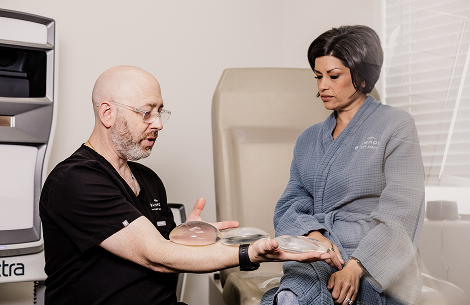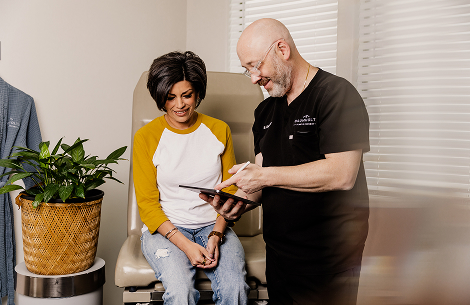

Dr. Michael Baumholtz hears it every week. Someone walks in asking for a specific letter, often tied to a friend’s result or an online post. He listens, then reframes the conversation. In his practice, cup size is not the plan and it is not the target. It is a clothing label that shifts from brand to brand and from band size to band size. He prefers to talk about your anatomy, your goals, and the measurements that connect the two. That approach keeps the process honest and predictable, and it leads to results that look like they belong on your body.
This article explains why cup size does not matter, how Dr. Baumholtz plans breast augmentation without relying on cup letters or raw implant volume, and what patients can expect from a method that prioritizes proportions, tissue health, comfort, and longevity. The tone is simple and direct because that is how he speaks with patients. There are no guarantees and no hype. There is a clear plan that is individualized and grounded in surgical judgment.
The Problem With Cup Sizes
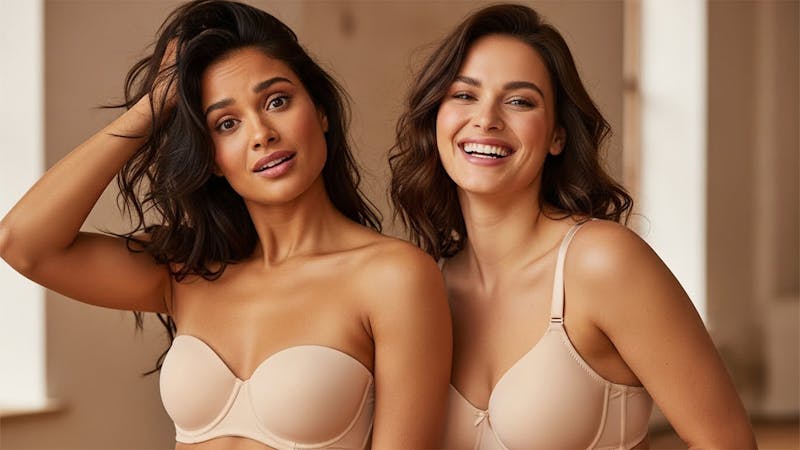
Bra sizing is not standardized. A 32C is not the same volume as a 38C. Different manufacturers grade cups and bands differently, and even within one brand the shape and fabric change how a cup fits. As a result, using a cup letter as a surgical target invites confusion. A patient may imagine a certain fullness and shape when she says C, only to discover that her favorite brand treats that letter very differently from another store. When a goal is built on a shifting definition, it is easy to miss.
For that reason, Dr. Baumholtz does not promise a cup size and does not plan to one. In Texas, where he practices, requests for a specific letter are less common than many articles suggest. Patients are more likely to say they want to look balanced, fit clothing better, feel more confident in a swimsuit, or restore volume after children. Those are clear and honest goals that can be translated into measurements and choices. That is the work of a consultation.
Video: How To Pick The Right Size Breast Implant For You
What Replaces Cup Size: Dimensional Planning
Dimensional planning is the backbone of his approach. The idea is straightforward. Your chest has a certain width, your tissues have a certain thickness and elasticity, and your skin envelope allows a certain shape. An implant should fit within these realities rather than fight them. When the implant fits the frame, the result looks natural and ages more gracefully.
The key measurements and decisions include the following.
- Breast base width
This is the most important number. It describes the footprint of your breast on the chest wall. The chosen implant should match or slightly respect this width. Overshooting the base width can push tissue toward the armpit or crowd the midline. Undershooting can leave a narrow, artificial look that does not match the shoulders or ribcage. - Projection and profile
Once width is set, projection determines how far the breast comes forward. Patients who want a gentle upper pole may choose a moderate projection. Patients who want a rounder upper pole can select a higher projection that still fits their base. Projection is a design knob. It only works well when width is correct. - Tissue quality
Thin tissues handle weight and stretch differently than thicker tissues. Skin elasticity, prior pregnancies, and weight changes all matter. The same implant can look very different in two people because their tissue envelopes behave differently. This is why photos alone are not enough, and measurements alone are not enough. Both pieces guide the plan. - Chest wall shape
The ribcage may be round, flat, or asymmetric. The sternum can be narrow or wide. These bony landmarks affect cleavage and how implants sit near the midline. Surgery can improve fullness and shape, but it cannot change bone anatomy. Setting expectations around this reality is part of an honest consultation. - Lifestyle and posture
Athletes, new mothers, and patients with physically demanding jobs have different needs. The implant that looks good must also live well. That means selecting a size and pocket that support movement, comfort, and long-term soft tissue health.
When these elements line up, there is very little need to mention cup size or even the raw implant volume in cubic centimeters. CCs are a byproduct of the correct width and projection. They are not the decision.
How He Translates Goals Into a Plan
Dr. Baumholtz starts with a conversation and a set of reference photos. He asks patients to bring images of breasts that look natural to them on bodies that resemble their own. This is not about copying a letter. It is about identifying shape and proportion. He then measures the base width, evaluates tissue thickness and skin quality, and studies the chest wall. Together, the visual target and the measurements create a narrow range of implants that make sense.
He discusses projection options within that range, pointing out how small changes affect the upper pole and the side view. He explains how a slightly higher or lower profile will influence the silhouette in clothing and in motion. If a lift is needed, he explains why. If absorbable mesh support would help, he explains where and how it reinforces the lower pole during healing. Each choice ties back to anatomy and goals. None of it depends on a cup letter.
Techniques That Support the Plan
Technique matters because it protects the plan you make together. Dr. Baumholtz follows a consistent, safety-first approach.
- Incision
He prefers the inframammary fold incision. The access is precise, the incision is easily hidden in the fold, and it can be reused if a future revision or lift is needed. It also limits bacterial contamination compared with certain alternatives. - Pocket
He uses a dual-plane pocket in most primary augmentations. This places the implant partially under the pectoralis muscle and partially under the breast gland. The result is a smooth chest to breast transition and less visible implant edge in the upper inner quadrant for many patients. - Implant type
His default is smooth, round silicone. Round implants form a natural teardrop shape once placed because gravity and the soft shell allow the gel to settle. He avoids macro textured implants due to known concerns with texturing. He is familiar with Allergan devices and regards Motiva as an innovative brand. The specific choice reflects anatomy, goals, and safety considerations. - Insertion
He uses a Keller Funnel to insert the implant without hand to implant contact. This supports sterility and allows a shorter incision. - Support when indicated
Absorbable mesh can be helpful in thin patients, in revision surgery, in augmentation combined with lift, or when larger implants are selected for the frame. It acts like an internal hammock while tissues heal. It is not necessary in every case. He explains when it adds value and when it does not. - Imaging
He does not use Vectra for body imaging. Planning relies on measurements, clinical assessment, and a clear discussion of goal photos. That combination keeps decisions grounded in anatomy and avoids false precision.
These steps do not chase a letter or a number. They protect tissue health, pocket position, and implant stability. That is how attractive results last.
What He Sees in Revision Surgery
Revision patients often teach the clearest lessons. Many arrive with implants chosen by letter or by a round CC number that sounded right at the time. Some feel too large for their frame. Others drifted laterally or sat too low because the soft tissues could not support the weight. A common request is downsizing to restore balance and comfort. The relief people feel after getting back to a proportionate size is real. They often say they feel like themselves again.
For revisions, the same dimensional principles apply, but the plan must also respect existing scar tissue, pocket changes, and skin stretch. Absorbable mesh may play a role. Pocket modification or a lift may be part of the solution. The point is the same. Cup size does not guide these decisions. Anatomy and goals do.
The Consultation Flow
Patients who meet with Dr. Baumholtz can expect a simple and focused process.
- Conversation
He listens to what you want and what you do not want. He asks how you dress, how active you are, and what makes you feel confident. - Photos
He reviews your reference images and clarifies what you like about them. Upper pole shape, side view, nipple position, and lower pole curve often come up here. - Measurements
He measures base width and evaluates tissue thickness and skin elasticity. He looks at your chest wall shape and shoulder width. - Education
He explains how width, projection, and pocket choice create the look in your photos. He describes what is achievable on your frame and what is not, and why. - Plan
Together you narrow to a small set of implants that fit the plan. CCs are noted for inventory and records, but they are not the goal. - Risks and recovery
He reviews the real risks of surgery, including bleeding, infection, capsular contracture, changes in sensation, malposition, and the possibility of future surgery. There are no guarantees. Clear aftercare helps minimize problems and support healing.
Breast Augmentation Before and After Photos

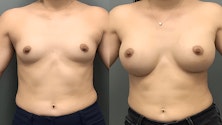
Visit Breast Augmentation Gallery for More Before and After Photos
Recovery in Plain Language
Recovery is personalized, but there are common themes. Most patients do well with early range of motion, frequent walking, and a stepwise return to activity. Supportive bras help reduce swelling and protect the pocket during the early weeks. Heavy lifting, intense chest workouts, and high impact exercise are paused for a period that fits your case. Follow up is not an afterthought. Dr. Baumholtz is known for long term patient access and follow up. Patients see him before surgery, soon after, and over time. That relationship is part of how he practices.
Sleep position, driving, childcare, and travel are discussed in practical terms. He explains how to recognize warning signs, when to call, and how to protect incisions while they mature. Scar care is addressed with simple routines that fit daily life. The goal is steady, uncomplicated healing that supports the result you planned together.
Why This Approach Feels Better To Patients
Patients often arrive burdened by the idea that there is a perfect letter or a perfect number of CCs. Letting go of that myth is a relief. The conversation becomes clearer. Instead of guessing at a label, you choose a look that matches your frame. Instead of hoping a number translates into confidence, you build a plan that produces the shape you like in real life.
The benefits show up in daily routines. Clothing fits with fewer compromises. Sports bras and swimsuits feel more predictable. Posture improves when the size respects the skeleton and the soft tissues. Years later, many patients report that they barely think about their implants. That is a good sign. The result integrated into their life.
A Word on Safety and Materials
Safety is the foundation. Dr. Baumholtz uses a sterile approach, careful pocket dissection, and implant handling techniques that reduce contamination risk. He selects smooth, round silicone for most primary cases and avoids macro textured devices. Saline implants are an option in specific situations and are discussed when appropriate. He does not oversell new materials. He explains options, tradeoffs, and the rationale for his preference set. He acknowledges that all implants carry risks and that no device is permanent. That transparency helps patients make informed choices.
Medication management, pain control, and return to normal activity are handled with simple plans that minimize narcotics when possible and promote movement. He coordinates with your other physicians when appropriate and communicates clearly about what to expect. His practice values predictability and patient education over quick fixes.
Cultural Expectations and Texas Reality
Every community has its own comfort zone for size and shape. Texas is diverse, and so are his patients. Some prefer a fuller look. Others want a quiet, proportional change that does not draw attention at work, school, or church. There is no single right answer. What matters is alignment between your goals and your frame. The wider world will change its trends. Your body and your lifestyle are the constants. Planning to those constants keeps you satisfied long after trends move on.
He also reminds patients that photographs on social media can mislead because of posing, lighting, and edits. A stable plan that matches your anatomy will outlive a trend or a feed. If you keep your focus on proportion, comfort, and tissue health, you are more likely to be content five and ten years down the road.
Putting It All Together
Cup size is a label that does not translate cleanly into surgical decisions. Raw implant volume is a number that does not predict a look without context. Dimensional planning replaces both with a method that is tailored, measurable, and repeatable. It begins with your goals and photos. It runs through base width, projection, tissue quality, and chest wall shape. It yields a set of implants that fit your frame and support the shape you want. Operative technique protects that plan during surgery and recovery. Follow up ensures that the result matures as expected.
This is how Dr. Baumholtz practices. He is dual board certified in General Surgery and Plastic Surgery, with fellowship training in Hand and Microsurgery. He is known for careful planning, revision expertise, and straightforward conversations. He values long term follow up and direct access for his patients. He does not take insurance. He does not promise a cup letter. He promises a process that respects your anatomy and your goals.
FAQs about C cup breasts and sizing
Is a C cup the most popular choice?
Not in his Texas practice. Preferences vary by region and by individual goals. Dr. Baumholtz finds that many patients who mention a C cup are really describing a balanced, natural look. He explains that the plan should be based on anatomy and dimensions, not a letter.
If I ask for a C cup, will I get that exact bra size after surgery?
No. Bra sizing is not standardized. A 32C and a 38C are different volumes, and brands fit differently. Dr. Baumholtz does not promise a letter size. He plans to your breast base width, tissue quality, and chest shape so the result looks proportionate on your body.
What does a C cup look like on different bodies?
Very different. On a petite patient with a narrow base width, a smaller implant can look like a full C. On a taller, broader patient, a larger implant may still appear moderate. Visual outcome depends on width, projection, and tissue behavior, not on the letter.
Can a C cup still look athletic and natural?
Yes, if it fits your frame. When width and projection are matched to your anatomy, patients usually feel comfortable running, lifting, and parenting. Dr. Baumholtz designs the pocket and selects implant characteristics to support movement and daily life.
I am worried a C cup will be too small. How does he prevent regret?
He uses a photo-driven and measurement-based discussion. You bring reference photos that reflect the shape you want. He measures your base width and shows how different profiles change the side view and upper pole. The goal is the look you like on your frame, not chasing a C label.
Can I go braless sometimes if I end up around a C cup look?
Many patients can for short periods. Long term tissue health usually benefits from regular support, especially during exercise and in early healing. Whether you can comfortably go without a bra depends on your skin elasticity, tissue thickness, and the final implant position.
Will a C cup look proportionate if my weight changes?
Moderate, frame-matched results tend to adapt better to routine weight shifts than oversized choices. Dr. Baumholtz sizes to your base width and soft-tissue support so the breast stays in harmony with your shoulders, ribcage, and waist as life changes.
I am over 50. Is a C cup look appropriate for me?
Age is not the deciding factor. Tissue quality is. Many patients in their 50s, 60s, and 70s choose a result that reads as a C cup in clothing because it looks proportional and is easier for tissues to support. He may recommend additional support or a lift if needed.
Can I switch to a C cup appearance during revision surgery if I am currently larger?
Often yes. Downsizing is common in revision work when implants feel too large or heavy. Dr. Baumholtz assesses the pocket, skin stretch, and tissue thickness. He may use techniques such as pocket modification or absorbable mesh to help maintain a smaller, more proportional result.
Is a C cup automatically safer than larger sizes?
No size is automatically safer. Safety improves when the implant fits your anatomy and your tissues can support the weight and position over time. Many patients who describe a C cup look are asking for that proportional fit, which can reduce strain and help longevity.
How many CCs make a C cup?
There is no fixed number. CCs are simply volume. The same CC number can create different looks depending on your width and projection. Dr. Baumholtz chooses width first, then projection, and the CC number follows from that decision. He does not plan to a cup or a CC target.
Will I look like a C cup in every bra after surgery?
No. Expect variation across brands and styles. The goal is not to hit a letter in every store. The goal is to achieve the shape and proportion you want on your body so clothes fit better and you feel comfortable and confident day to day.
Medical References
- Analysis on the Difference between the Practical Brassiere Size and the Actual Measurement in South Korean Women. https://pmc.ncbi.nlm.nih.gov/articles/PMC10424888/
- The relationship between breast size and aspects of health and psychological wellbeing in mature-aged women. https://pmc.ncbi.nlm.nih.gov/articles/PMC7235664/
- Associations of age, body mass index, and breast size with mammographic density based on the breast imaging-reporting and data system. https://www.e-jmls.org/journal/view.php?number=508
- The Search for the Ideal Female Breast: A Nationally Representative Study. https://pmc.ncbi.nlm.nih.gov/articles/PMC9512736/
- Establishing Institution-Specific Normative Data for the BREAST-Q Augmentation Module: A Single Center Experience. https://academic.oup.com/asj/article/40/6/NP348/5611243
Closing and Next Steps
If you want a plan that is built on your frame and your goals, schedule a consultation with Dr. Michael Baumholtz in San Antonio. Bring a few reference photos and be ready to talk about how you live, how you work, and what you want to see in the mirror. He will measure, explain options in clear terms, and outline a step by step plan that does not depend on cup size or CCs. His office can review timing, recovery, and fees. Insurance is not accepted.
Call the office or request an appointment online to start your consultation.
Further Reading
- Read Dr Baumholtz's Blog on Breast Augmentation Plastic Surgery
- Read Dr Baumholtz's Blog on Top 5 Benefits of Breast Augmentation
- Read Dr Baumholtz's Blog on Considering Breast Augmentation? Know Your Options
- Read Dr Baumholtz's Blog on Breast Augmentation Recovery: Tips for a Smooth Journey