
Many women look in the mirror and see a cone-shaped breast or a puffy areola and worry they caused it. They didn’t. This page explains what that shape means and how Dr. Michael Baumholtz addresses it in a safe, staged way. The goal is simple: a breast that sits comfortably on the chest and looks like it belongs there for the long term.
Dr. Baumholtz keeps the focus on education, proportion, and durability. Plans fit the patient’s life, not the other way around. His approach is steady and transparent because lasting change depends on careful sequencing and respect for anatomy.
What People Mean by “Pointy” or “Puffy”
“Pointy” usually describes a conical breast with limited fullness in the lower half and a fold that sits higher than expected. “Puffy” usually refers to a dome-like bulge of the areola caused by tissue pressing forward. These often track with the medical term tuberous (constricted) breast. It appears with puberty, can affect one or both sides, and often comes with asymmetry. It isn’t a behavior-based issue; it’s how the tissue formed.
Why This Matters
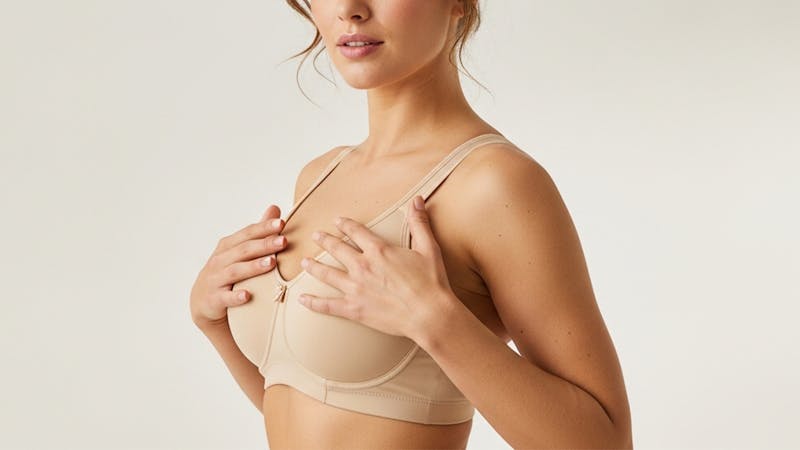
Clothes may not fit cleanly. Bras can feel like a compromise. Swimwear shopping can be frustrating. These everyday issues carry emotional weight. Naming the pattern helps; understanding the mechanics creates a path forward. This is a developmental difference, not a disease. The aim is a balanced breast that behaves well in clothes and motion.
Video: Ask A Plastic Surgeon- More Details About Breast Augmentation
The Visible Signs Patients Notice
Common observations include:
- A base that looks narrow for the chest
- A lower pole that never rounded out
- A high inframammary fold that acts like a shelf
- A puffy or enlarged-looking areola
- Side-to-side differences in size, fold height, or areolar diameter
A formal diagnosis is in-person. Hands-on evaluation clarifies what needs release, where the fold belongs, how much of the areolar “puff” is structural, and how tight the bands are on each side.
How This Shape Develops
During puberty, the lower pole stays tight. The fold sits too high and blocks normal expansion. Areolar support is weaker, so glandular tissue can press forward. The footprint stays narrow, projection concentrates into a cone, and the lower pole under-develops. This is unrelated to bras, exercise, diet, or posture.
How Severity Shapes the Surgical Plan
Not all tuberous breasts are the same. Severity of constriction bands, fold height, and areolar changes guide the plan.
- Mild: Lower-pole release through a fold incision; implant if volume is desired; often no large surface scars.
- Moderate: Lower-pole release + implant; areolar tightening may be added later.
- Severe: More extensive release and fold work; staged areolar tightening or skin work as needed. Dr. Baumholtz prefers to start with the simplest effective lower approach and only add steps if needed later.
Traditional Teaching vs. Dr. Baumholtz’s Approach
Older teaching often defaulted to larger reduction-style scars and heavy periareolar work up front. Dr. Baumholtz favors a measured, stepwise plan:
- Start with the least invasive, most powerful move: inframammary (fold) incision, lower-pole release, fold reset, and implant if volume is desired.
- Let tissue stretch and adapt.
- Add focused areolar reduction later only if needed.
This limits scars, uses natural tissue stretch after release, and preserves options for the future.
Treatment Philosophy: Shape First, Size Second
Using a big implant to hide a tight shape often causes new problems. Dr. Baumholtz fixes structure first, then discusses volume:
- Release the tight lower pole
- Set and support the fold at the correct level
- Support/resize the areola when needed
- Then add volume (implant ± limited fat grafting) based on breast width and goals
How Dr. Baumholtz Builds a Plan
Listen - Examine - Explain - Plan
- Listen: Priorities, trade-offs to avoid, daily life needs.
- Examine: Base width, fold position/strength, lower-pole bands, areolar diameter/quality, skin thickness, asymmetry grading.
- Explain: What can be done now vs. staged; likely scars and why; timing around work, childcare, and Texas heat.
- Plan: Incision (inframammary), pocket (often dual-plane), implant details, whether areolar work is now or later, and realistic timelines.
The Building Blocks of Correction
- A) Lower-Pole Release via Inframammary Incision
The lower half is tight. Releasing internal bands lets the lower pole round out. A fold incision gives direct access for precise release, fold control, and pocket creation with a short, well-hidden scar. Dr. Baumholtz strongly favors this approach. - B) Fold Control and Support
A high fold blocks shape. He lowers and secures the inframammary fold to a stable position so the breast has a foundation. Clothing and bras tend to fit more naturally once the fold is correct. - C) Areolar Support and Diameter Control (Often Second-Stage)
He frequently waits to see how much the areola flattens after release and fold reset. If needed later, he performs a focused periareolar tightening to keep the circular scar as small as practical. - D) Volume Strategy - Implants and Selective Fat
- Implants give predictable volume and projection. He uses smooth, round implants and avoids textured devices.
- Fat grafting is a fine-tuning tool for small irregularities; it is not his primary method for large volume changes.
- E) Pocket Choice and Implant Details
A dual-plane pocket is common to soften transitions and allow lower-pole fill after release. Access is inframammary for control and re-use in the future. He uses a Keller Funnel and a sterile routine with Betadine prep and irrigation. - F) Tissue Support in Select Cases
When tissue is thin, implants are larger, or this is a revision, Dr. Baumholtz may add an absorbable mesh as temporary scaffolding to help protect the fold and pocket. This is individualized, not automatic. - G) Asymmetry Edits
Each side gets what it needs - different release, fold shift, areolar sizing, or implant projection - so the pair reads as “sisters,” not clones.
Size Choices Without Guesswork
Cup size and CCs aren’t a plan. He measures base width, studies chest/shoulder proportion, uses a small “wish book” of patient photos to align taste with anatomy, then selects the smallest effective implant that meets the shared goal.
What a Bigger Implant Will (and Won’t) Do
Will: Add volume, fill bras, and look fuller in clothing.
Won’t: Release tight bands, lower a high fold, or flatten a puffy areola. Pushing size to hide structure risks bottoming-out, lateral drift, or symmastia - harder problems than doing it right up front.
Recovery in Plain Language
- Same-day surgery for most aesthetic breast cases
- Supportive garment or soft bra
- Multimodal pain plan to limit opioids; short courses used if needed
- Week 1: Tightness and fatigue are common; sleep elevated; short walks help
- Weeks 2-3: Light tasks; driving when off prescription pain meds and comfortable; massage may start around 2 weeks in straightforward augmentations (later if lift/mesh/revision)
- Weeks 3-6: Gradual activity build
- After 6 weeks: Return to full activity is typical, paced to the individual
- Scar care after incisions seal: silicone, sun protection, massage
San Antonio heat and humidity can amplify swelling. Breathable fabrics, hydration, and smart seasonal timing help.
Safety, Risks, and Realistic Expectations
All surgery carries risk: bleeding, infection, scars, capsular contracture, and - over time - the possibility of revision. Dr. Baumholtz explains which risks technique can influence and which are tied to healing biology. He does not offer guarantees; he offers a careful process and close follow-up. Breasts will remain “sisters, not twins.” The office provides simple warning signs and direct access between visits.
Practice standards:
- Implant choice: Smooth, round
- Placement: Often dual-plane for softer transitions and less visible rippling
- Incision: Inframammary for control, sterility, and ease of future revision
- Drains: He does not use drains in aesthetic breast augmentation
Who Might Be a Candidate
Healthy adults at stable weight who care more about shape than chasing size, are nicotine-free, and are willing to follow instructions. Pregnancy and breastfeeding can change the breast again; some patients time surgery accordingly. This is a private-pay practice for aesthetic procedures. Dr. Baumholtz does not participate with insurance for elective cosmetic surgery, and he does not operate on active nicotine users.
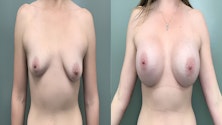
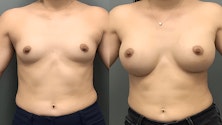
Breast Augmentation Before and After Photos
Living in San Antonio: Practical Considerations
Plan around heat, school calendars, Fiesta, work travel, and easy access for early follow-ups. Many patients choose cooler months to make recovery more comfortable.
Materials and Brands Are Tools - Not Promises
Implants, mesh, and technique are ingredients. Outcomes depend on planning, execution, and healing. Dr. Baumholtz treats brand names as tools, not results.
Cost, Policies, and Planning
Fees reflect time, complexity, and materials, with an eye toward value and durability. Patients usually set aside a week of lighter duties, prepare front-closing tops and supportive bras, stock simple meals, arrange help for the first several days, and plan hydration and rest.
What Makes This Practice Different
Patients spend time with the surgeon and leave with a clear explanation of what will happen and why. Dr. Baumholtz brings extensive experience with breast revision and fold control, is careful with implant sizing and pocket choices, and uses reinforcement when it truly serves the plan. Long-term follow-up and access are part of the culture.
Real-World Change Without Hype
Success is quiet: a bra that finally fits, tops that lie flat, an areola that no longer dominates the mirror, and a breast that moves and rests the way it should.
Preparing for a Consultation
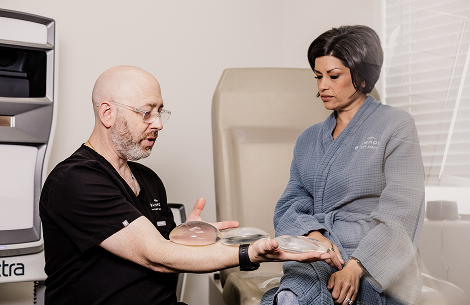
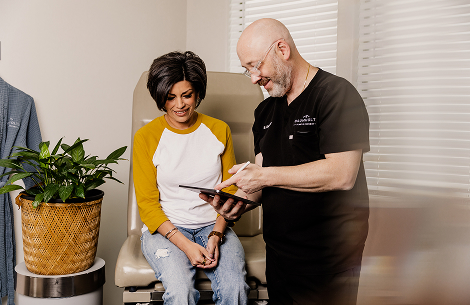
Bring a few example photos that match your frame and taste. Make a short list of priorities. Note any changes after pregnancy or weight shifts, and bring a full medication/supplement list. In the office, Dr. Michael Baumholtz will examine shape, map the fold, grade constriction bands, explain why he prefers a lower-approach release first, and outline if or when areolar work might be added later. Expect a clear, staged plan that respects both your anatomy and your life.
FAQs About Puffy Nipples
Does severity change the surgery?
Yes. Mild cases may be handled with a fold incision, lower-pole release, and implant alone. More severe cases may need staged areolar work or, rarely, broader patterns. He starts with the least invasive effective move and builds only if needed.
Why an inframammary incision instead of around the areola?
It lets him release the lower pole, reset the fold, and place an implant with strong control - and it reduces contamination risk compared with a periareolar approach. If areolar tightening is needed later, it is smaller and more focused.
Will lowering the fold and releasing bands change how sports bras feel?
Usually yes. Once the fold sits correctly and the lower pole can expand, bras tend to hug more naturally.
Can a puffy areola improve without separate areolar surgery?
Sometimes. After lower-pole release and fold reset, the areola often flattens. That is why he often waits before deciding on periareolar tightening.
What if I plan to have children?
Pregnancy and breastfeeding can change the breast again. Timing is part of the consult; some wait until family plans are complete. For younger patients who still proceed, Dr. Baumholtz generally favors an inframammary approach with dual-plane placement to limit interference with glandular tissue.
Medical References
- Tuberous breast deformity in a transgender woman: a case report. Published 2025 in a peer-reviewed medical journal, this reports on the clinical presentation and surgical management of tuberous breast deformity, highlighting its rarity and treatment
https://pmc.ncbi.nlm.nih.gov/articles/PMC12416806/ - Review of Tuberous Breast Deformity: Developments over the Years. A 2022 comprehensive review on tuberous breast deformity including pathology, diagnosis, and surgical correction options.
https://pmc.ncbi.nlm.nih.gov/articles/PMC9187173/ - Detection and comparison of breast shape variation among women. 2019 research article studying shape differences in breasts with quantitative methods, relevant for understanding breast shape variations including pointy breasts.
https://journals.sagepub.com/doi/10.1177/0040517519839398 - Long-term results of the tuberous breast: What to expect from treatment. A 2024 study analyzing outcomes and patient expectations after surgical correction for tuberous breast deformity.
https://journals.sagepub.com/doi/full/10.1177/14574969241250213 - Breast and the evolutionary history of their different shapes. 2025 academic study exploring natural breast asymmetry and shape variations with objective imaging technology.
https://www.academia.edu/49146076/Breast_and_the_evolutionary_history_of_their_different_shapes - BREAST AND NIPPLE CONDITIONS - Baby-Friendly Hospital Initiative (NCBI book). Provides clinical information on breast conditions and morphology from an educational government-affiliated source.
https://www.ncbi.nlm.nih.gov/books/NBK153481/
Call to Action
If your breasts feel pointy, your areolas look puffy, or bras never quite fit, a focused conversation can help. Schedule a private consultation with:
Dr. Michael Baumholtz, Double Board-Certified Plastic Surgeon - San Antonio, Texas.
He will examine your anatomy, grade the severity of constriction, and outline a clear, staged plan that starts with a simple inframammary approach and only adds steps if they are truly needed.
Further Reading
- Read more about Breast Augmentation
- Read Dr Baumholtz's Blog on Breast Augmentation Plastic Surgery
- Read Dr Baumholtz's Blog on Types of Breast Implants
- Read Dr Baumholtz's Blog on Top 5 Benefits of Breast Augmentation
- Read Dr Baumholtz's Blog on Causes And Solutions For A Flat Chest In San Antonio