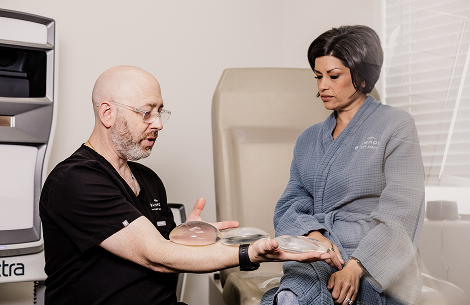

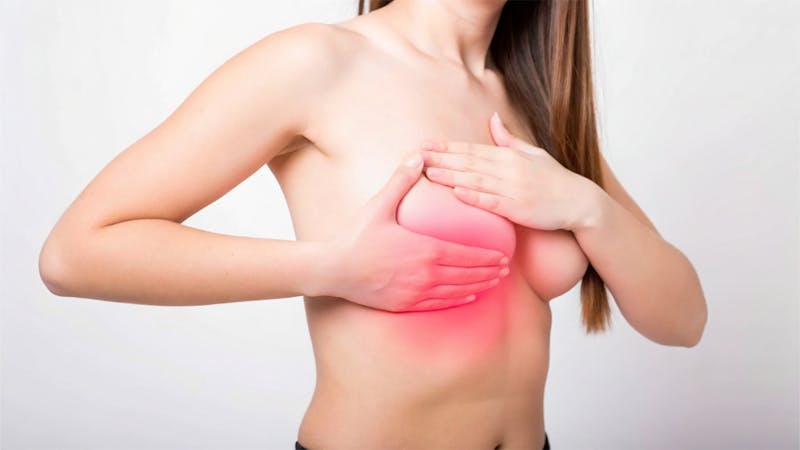
Bruising and swelling are part of normal healing after breast reduction. The aim is not to erase them; the aim is to guide them so recovery feels steady, safe, and predictable. Dr. Michael Baumholtz, a highly experienced Plastic Surgeon in San Antonio, TX, is dual board-certified and known for clear communication, careful technique, and a patient-first mentality. He favors simple, proven steps over trends, and he explains every choice in plain language so patients understand what to expect and why it matters. This page describes how he helps minimize bruising and swelling after Breast Reduction while keeping expectations honest and results measurable.
Ready for Surgery? Take Dr Baumholtz Surgery Quiz
Why Bruising And Swelling Happen (And Why That’s Okay)
Bruising appears when tiny blood vessels in the treated tissue seep a small amount of blood under the skin. The initial color can look dramatic, then shift from purple to green, yellow, and faint brown as the body breaks down the residual pigment. Swelling is the body’s way of protecting and repairing - fluid moves into the area, bringing cells and nutrients that support healing. Both responses are normal after a Breast Reduction, and both fade with time.
In the first days, bruising is often most visible, while swelling can make the chest feel heavy, firm, or puffy. None of this means something is wrong. It means the body is doing its job. The question is how to help the body do that job with less drama. Dr. Michael Baumholtz answers with a plan that prioritizes comfort, circulation, and tissue respect. He does not chase the idea of “no swelling.” Instead, he aims for steady improvement. He teaches patients to watch trend lines rather than fixating on daily fluctuations, using simple markers like easier arm movement, better sleep, and a garment that feels more comfortable as days pass.
Video: Markings For A Breast Reduction
What To Expect: A Simple, Usable Timeline
- Days 0-3: The first seventy‑two hours usually declare the direction of healing. This is when bruising is most pronounced and swelling tends to peak. Elevation helps; so does a supportive, front‑closure garment that limits bounce without squeezing (more on this below). Short, frequent walks around the home support circulation and reduce stiffness. Many patients notice that each nap or good night’s sleep brings a little more ease the next day.
- Days 4-10: The colors begin to soften and change. Tenderness eases, energy returns by degrees, and the chest starts to feel less tight. Patients often discover that getting up, moving gently, and then resting again creates a comfortable rhythm. During this time, incision care is simple and consistent. The garment stays on. Workouts wait.
- Weeks 2-3: Most bruising has faded and swelling trends down in a smooth, predictable curve. Range of motion improves below shoulder height, and daily tasks feel more manageable. The garment still matters because breasts remain sensitive to motion even when the skin looks quiet. If straps begin to feel loose, that is often a sign that swelling is resolving.
- Weeks 4-6: Activity broadens in stages with guidance from the office. Once incisions are fully closed and dry, silicone scar therapy begins, and gentle massage is introduced when cleared. Sun protection becomes a daily habit, especially in a sunny place like San Antonio, TX. Full settling continues for months, and patients who give the process time are rewarded with softer tissue and a calmer chest contour.
What Shapes Bruising And Swelling
Biology sets the backdrop. Skin thickness, vessel fragility, collagen quality, and personal history all affect how bruising and swelling look and how long they last. Age and prior surgeries can influence the timeline, and so can variations in the body’s inflammatory response. Dr. Michael Baumholtz accounts for these factors in his planning and in his follow‑up, recognizing that two patients with similar operations may heal at different speeds.
Procedure details matter as well. The amount of tissue removed, the technical path to achieve proportion, and total time in surgery all contribute to how tissues respond. Technique is not just a concept; it is a thousand small decisions that add up to a smoother recovery. Medication and supplement use forms another layer. Prescription blood thinners are obvious, but common over‑the‑counter products and natural supplements can also increase bruising risk. Transparency about everything a patient takes is a safety tool, and it helps the team reduce surprises.
Daily behavior shapes healing too. Overhead reaching, heavy lifting, and early workouts can flare swelling and extend bruising. Gentle walking and a mindful posture help. The right support garment reduces motion and friction. The wrong pressure - especially from a garment that is too tight - can create new problems. Comfort and consistency beat intensity every time.
In The Operating Room: How Dr. Baumholtz Sets The Stage For A Calmer Recovery
Inside the operating room, meticulous hemostasis is the quiet discipline that pays dividends after surgery. Dr. Michael Baumholtz, Plastic Surgeon in San Antonio, invests attention in small vessels and diffuse oozing because less bleeding in the operating room typically means less bruising afterward. He couples this with gentle, thoughtful handling of tissue. Instruments are used deliberately, retraction is minimized where possible, and the path to the outcome is planned to respect the biology of the breast.
Drains are not routine for aesthetic breast surgery in his practice, though they remain an option when specific anatomy or intraoperative findings make them useful. The choice is discussed in plain terms because comfort and safety are both legitimate goals. Equally important is the medication strategy. A balanced, multimodal plan aims to control pain without oversedation, allowing earlier, safer movement. Movement is not only about comfort; it supports circulation, which helps swelling resolve.
Closure and contour are not afterthoughts. Layered closures, careful tension management, and attention to symmetry reduce hot spots that can collect fluid or bruise deeply. The philosophy is simple: do the careful things that make the next week easier. Patients do not watch those steps, but they feel the result.
The Breast Reduction Garment - Support that helps
The garment conversation is straightforward. A soft, front‑closure surgical or athletic‑style bra that holds the chest comfortably is the default. Smooth fabrics prevent rubbing, and a front closure simplifies dressing in the early days. The goal is to limit motion, not clamp down.
Important: Over‑compression is counterproductive. It slows circulation, irritates skin, and can actually worsen swelling and bruising. If a bra feels like a vise, it is the wrong bra.
Wearing the bra day and night as instructed keeps the breast from bouncing during routine motions such as getting out of a chair, turning in bed, or walking down a hallway. Washing and fully drying the garment matters for skin health, so having a second bra for rotation is practical. Watch the skin, not just the straps. If red marks persist or fabric chafes, speak up. The office will help adjust fit or recommend a different model. As swelling decreases, the chest changes shape, and so should the garment plan. Transitioning to lighter support at the right moment keeps comfort and protection in balance.
The First 72 Hours: Small Moves, Big Impact
Positioning is medicine in the early phase. A semi‑reclined posture with a modest pillow stack reduces head and chest congestion and protects the repair. Sleeping flat or on the side is discouraged until the tissue is calmer.
Cold therapy has a place - with clear safeguards.
- Never apply ice or gel packs directly to the skin. Direct cold can injure skin and nerves and complicate healing.
- If instructed to use cold, Dr. Baumholtz prefers simple, flexible options like bags of frozen peas because they mold to the chest comfortably.
- Place the cold pack over the bra or another layer of fabric, never on bare skin.
- Use short cycles: 15 minutes on, 15 minutes off, and stop if the area feels numb, overly cold, or uncomfortable.
Nutrition is equally practical. Hydration is steady rather than forced. Meals lean toward protein with lower sodium to avoid unnecessary fluid retention. Alcohol waits for another time. Short, frequent walks - often to the kitchen, around the living room, and back to bed - support circulation and joint comfort. The pain plan is taken on schedule because comfort supports movement, and movement supports healing. Home setup supports all of this. Keep essentials at counter height to avoid reaching. Place medications, water, and a phone within easy reach. Organize the space so the body can rest without struggle.
Days 4-14: Finding The Rhythm
This stretch is about momentum. Energy comes back in waves, and that is normal. Many patients notice a pattern of moving, resting, and then moving again. Arms stay below shoulder height to protect sutures and minimize strain on the healing tissues. Overhead chores can wait. Showering follows the written plan, with gentle cleansing and careful drying. Fragranced products and rough towels remain on the shelf for later.
The garment is reassessed as swelling changes. What was snug on day two may be loose on day ten, which is a welcome sign of progress. Instead of tightening straps until the garment bites, the fit is rebalanced to stay comfortable. In‑office check‑ins during this period serve multiple purposes. They confirm the healing trajectory, fine‑tune garment fit, and address small concerns before they grow. Dr. Michael Baumholtz also coaches mindset. Bruises often look worse before they look better, and that can be unsettling. He redirects attention to the trend: more ease, better sleep, less morning puffiness.
Weeks 3-6: Stepwise Return To Normal Life
By weeks three and four, the day looks more like normal life. Activity expands with judgment. Light chores, desk work, and short outings become feasible. Heavy lifting and vigorous exercise remain on hold until cleared because the tissue is still remodeling beneath the skin, even if the surface looks calm. Driving returns when the patient is off sedating medication and can comfortably and safely control the vehicle, including sudden maneuvers.
Scar care begins when the incisions are fully closed and dry. Silicone sheets or gels are used daily, and consistency matters more than the specific brand. Gentle scar massage is added when cleared to support pliability and reduce the sensation of tightness. Sun protection becomes a habit. In San Antonio, TX, UV exposure is a year‑round reality, and protecting healing skin reduces the chance of long‑term discoloration. Sleep quality usually improves as tenderness fades, and posture returns to normal as confidence grows.
What To Avoid If Bruising And Swelling Are The Concern
- Over‑compression. It restricts circulation, irritates the skin, and slows the process patients want to accelerate.
- Direct ice on skin. Skip bare‑skin ice or long, numb sessions. If cold is used, keep it over fabric and limit to 15‑on/15‑off cycles, using flexible packs like frozen peas.
- Heavy lifting and forceful push‑pull movements. They ask too much of tissues that are still settling; overhead chores strain the repair.
- Heat and hot environments (hot tubs, saunas, hot yoga) in the early phase; they encourage fluid to persist where it is not wanted.
- Alcohol and salty foods in the first weeks; both can amplify fluid retention.
- New supplements or medications without clearance; “natural” does not mean inert.
- Going it alone. Ask for help with meals, rides, bags, and pets to avoid trading short‑term convenience for long‑term setbacks.
How Dr. Baumholtz Personalizes Your Plan In San Antonio TX
Preparation is an intervention, and Dr. Michael Baumholtz, Plastic Surgeon in San Antonio, TX, treats it that way. Before surgery, medications, supplements, past surgeries, and healing history are reviewed so the team can reduce bleeding risk, clarify anesthesia details, and line up support at home. In the operating room, anatomy, goals, and lifestyle inform the plan. He aims for proportion and comfort now and durability later, knowing that weight shifts, hormones, and life events can influence the body down the road.
Recovery is staged on paper and revisited in person. Patients leave with a written plan covering garments, movement, nutrition, and medication timing. The plan is designed to be easy to follow and easy to adjust. Access to the team is built in. Questions are welcomed early because early questions prevent bigger problems. The advantage of local care in San Antonio, TX is tangible: fittings can be tweaked, concerns can be checked, and reassurance can be delivered in real time by the same people who know the case.
Emotions, Expectations, And The “Mirror Test”
Recovery is not only physical. It is emotional. Relief, excitement, impatience, and worry can cycle through the same afternoon. Dr. Michael Baumholtz normalizes those feelings and gives patients simple tools to steady themselves. The mirror test asks for a weekly view instead of a daily one. Stand back, breathe, and decide whether this week feels better than last week. The comfort test focuses on movement, sleep, and the way the garment feels over time. The morning test looks at how the chest feels at the start of the day when swelling tends to be most noticeable.
His guiding philosophy is consistent. What the patient wants and what he can safely deliver become a shared plan. He avoids guarantees because biology makes guarantees unwise. What he offers is a thoughtful map, steady coaching, and the surgical judgment to adapt as the body responds.
Look for Red Flags During Recovery
Some changes deserve immediate attention. One‑sided, rapid swelling or a sudden, firm enlargement on one side can signal a problem. New or escalating pain, tightness, or pressure that does not respond to the plan merits a phone call. Fever combined with increasing redness or concerning drainage needs evaluation. Shortness of breath or chest pain is an emergency and should prompt immediate medical care. When in doubt, call. No one is ever criticized for asking early.
Nutrition And Medication Pointers That Support Calmer Healing
Protein is the foundation of tissue repair, and a protein‑forward approach to meals helps the body build what it needs. Hydration is steady and practical, with water available at every resting spot. Sodium awareness is useful in the first weeks because restaurant meals and packaged foods can drive fluid retention. Medication timing matters, and the office provides a schedule that balances comfort and safety. Over‑the‑counter products and supplements are not added without a conversation because many have real effects on bruising or bleeding. Bowel regularity is supported with fiber, hydration, and gentle walks, and safe stool softeners can be discussed if needed. The overall theme is consistency. Small, repeated choices move the needle more than occasional surges of effort.
Scar Care That Also Soothes Residual Swelling
Scar therapy begins only when incisions are closed and dry. Starting too early irritates skin and slows healing. Silicone - whether in sheets or gels - creates a stable environment that helps scars soften and flatten over time. Daily use is the key. Gentle massage is introduced when cleared to improve pliability, reduce tightness, and make the skin feel more natural. Sun protection is non‑negotiable. In San Antonio, TX, protecting healing skin from UV prevents unwanted darkening and supports smoother texture over the long term. Patience finishes the job. Scars continue to mature for many months, and what looks pink and firm at six weeks can look flat and quiet at six to twelve months.
Common Myths That Worsen Bruising And Swelling - And How Dr. Baumholtz Counters Them
- “Tighter is better.” False. Over‑compression can increase swelling and bruising and irritate skin.
- “If it doesn’t hurt, push harder.” Healing tissue is not a test of toughness. Pacing protects the outcome.
- “Ice all day.” No. Prolonged cold can be harmful. If cold is prescribed, keep it over fabric and use 15‑on/15‑off cycles.
- “Supplements are harmless.” Many have real effects on bleeding and bruising. Nothing new is added without clearance.
- “Everyone’s timeline is the same.” It isn’t. Dr. Michael Baumholtz adjusts the plan to the person - not the person to a rigid schedule.
What Sets This Approach Apart (Without the Hype)
Credentials are the floor, not the ceiling. Dual board certification in General Surgery and Plastic Surgery and fellowship‑level microsurgical experience shape how Dr. Michael Baumholtz plans, operates, and follows through. Revision expertise sharpens judgment and reinforces a measured pace that respects biology. Communication is practical and direct. Short sentences, clear steps, and honest explanations reduce anxiety and improve adherence. Access matters just as much. Follow‑up is part of the procedure, not an afterthought, and patients feel that from the first phone call through the last visit. Being rooted in San Antonio is another strength. Local care means continuity, familiarity, and the ability to fine‑tune details quickly when details matter most. Contact us or read the pricing page for more information.
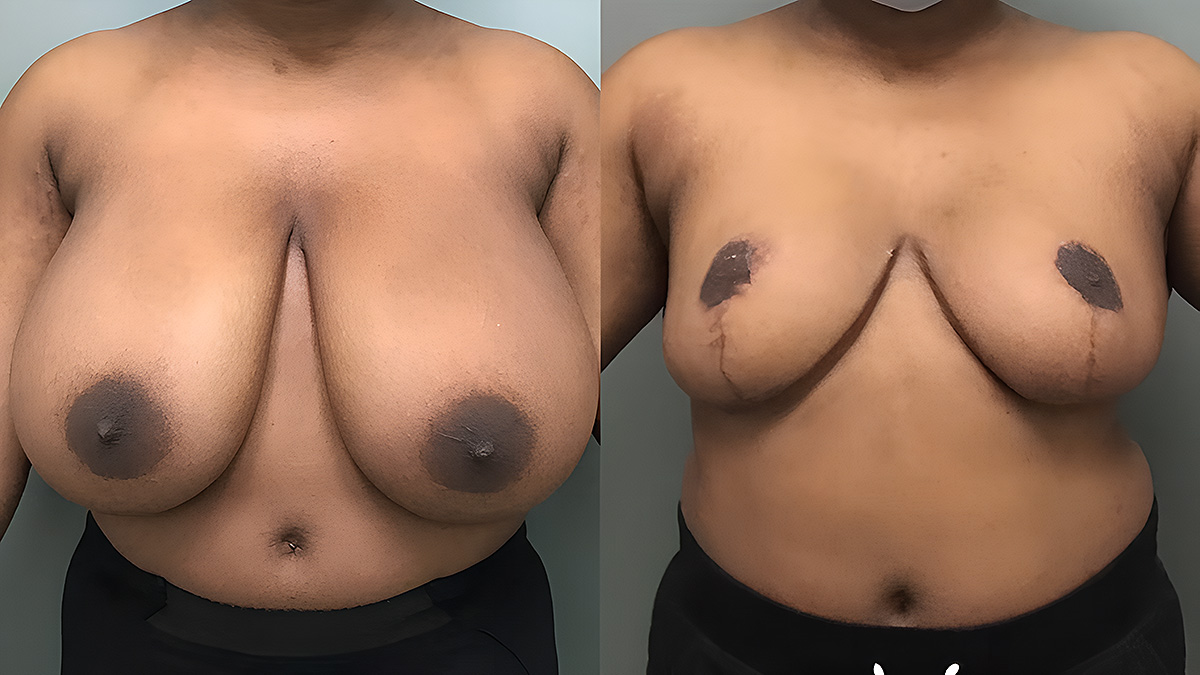
Breast Reduction Before and After Photos
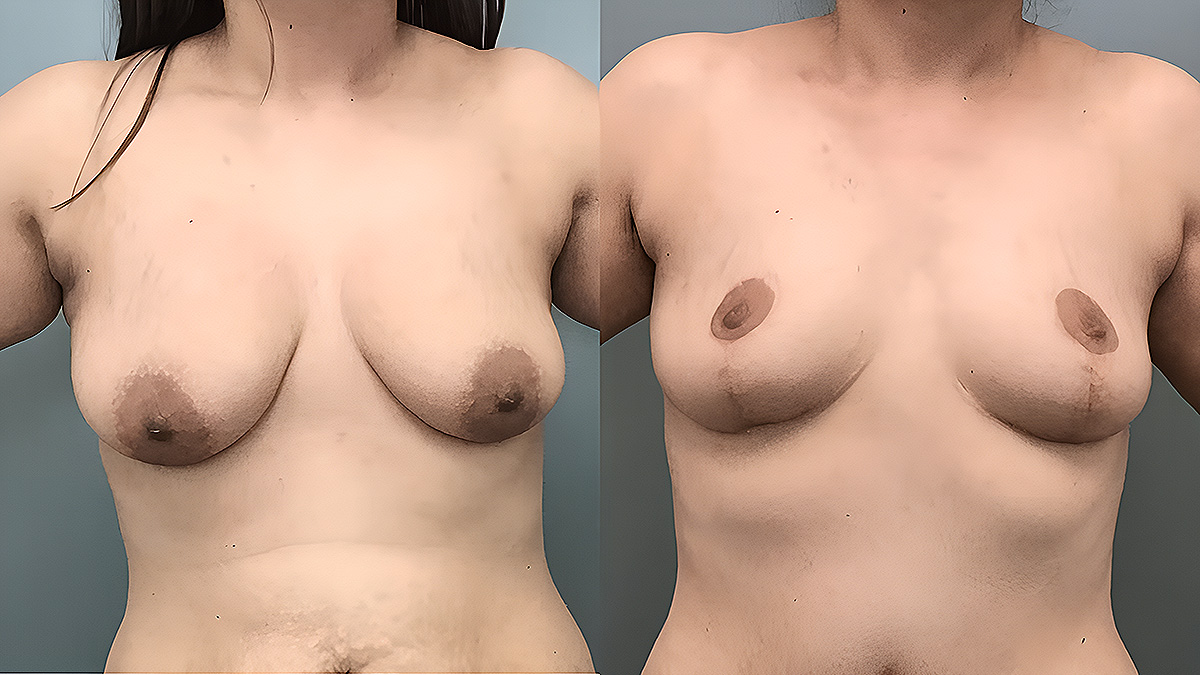
A Realistic “Day In The Life” Recovery Walkthrough
- Day 0 / Night 1: The front‑closure garment stays on, the pillow stack is set, and medications are taken on schedule. Short walks begin within hours, and a support person helps with meals, hydration, and reminders so the patient can focus on resting.
- Days 2-3: Comfort building becomes a routine. If cold therapy is part of the plan, it’s frozen peas over the bra, 15 minutes on and 15 minutes off. Meals are simple, protein‑forward, and lower in sodium. Showers happen as instructed, and incisions are patted dry. Entertainment fills the day, but long stretches hunched over a phone are avoided to prevent neck and shoulder strain.
- Days 4-7: The turn is noticeable. Bruises change color and look less intense. Swelling feels softer. Walks lengthen slightly but remain gentle. Lifting, pushing, and overhead chores are still deferred.
- Week 2: Reassurance arrives at the check‑in visit. Garment straps are adjusted, questions are answered, and the written plan is fine‑tuned. Confidence grows because there is a clear path forward.
- Weeks 3-4: Driving resumes when safe, and desk work or light duties fit into the day. Silicone scar therapy begins when fully closed and dry, and gentle massage starts when cleared. Outdoor time includes careful sun protection.
- Week 5 and beyond: The body continues to reclaim strength and stamina. The garment transitions to lighter support. Comfort climbs. The shape refines over months as residual swelling resolves.
How To Prepare Before Surgery To Minimize Bruising And Swelling
Preparation two weeks ahead sets the tone. All medications and supplements - prescription, over‑the‑counter, and natural - are reviewed and adjusted as needed. Rides, childcare, pet care, and household help are arranged so physical strain does not derail early healing. Supplies are gathered in advance: front‑closure bras, soft cold packs or bags of frozen peas with fabric covers, extra pillows, gentle soap, and easy meals. The home kit is practical. A pill organizer tracks timing. A refillable water bottle sits beside each resting spot. Chargers are placed where they are needed. A small crossbody bag keeps tissues, lip balm, and a timer within reach for icing sessions.
Food planning reduces stress. Protein‑forward, lower‑sodium meals are prepared or purchased ahead of time to avoid last‑minute errands. Hydrating drinks are stocked. The support person is chosen for reliability and calm, and the written plan is reviewed together so everyone knows who to call and when to call. The mindset aligns with the plan. Healing is not a race. Consistency is the lever that moves recovery in the right direction.
Surgery Fees & Costs, Policies, And Expectations
Clarity is part of care. Fees are reviewed in writing before scheduling so patients know what is included and what is not. Dr. Michael Baumholtz does not take insurance for aesthetic procedures, and the office outlines payment timing and options without surprises. Value here is measured by safety, communication, and access.
Follow‑up is integrated into the process rather than treated as optional. Local convenience in San Antonio, TX matters because a nearby office makes fine‑tuning garments, reviewing scar care, and addressing concerns faster and easier. Peace of mind is not just a feeling; it is a practical advantage.
Who Benefits Most From This Approach
Women who want comfort and function often see the most meaningful change. Relief of back, neck, and shoulder strain pairs with clothing that fits more predictably and daily activities that feel lighter. Women who appreciate clear instructions thrive with a stepwise, written plan that turns uncertainty into action. Women who value proportion rather than trends find a philosophy that respects anatomy and aims for durable results. Women who prioritize access choose a surgeon and a team who answer questions quickly and follow through. The common denominator is partnership. The plan is built together and lived together.
FAQs About Reducing Bruising And Swelling After Breast Reduction
How does Texas heat and humidity affect swelling after surgery?
Warm, humid weather can make early swelling feel more noticeable. Dr. Michael Baumholtz, Plastic Surgeon in San Antonio, TX, advises staying indoors during the hottest hours, keeping cool packs with a fabric barrier handy, hydrating consistently, and avoiding outdoor errands until he clears activity. Air conditioning, light breathable clothing, and a supportive front‑closure bra help the body settle.
Can seasonal allergies impact bruising or my medication plan?
Allergy flares can increase congestion and reduce sleep quality, which can indirectly affect swelling. Some over‑the‑counter remedies may interact with a post‑operative plan or increase bleeding risk. Patients in San Antonio often manage cedar season, so he asks that all allergy medications and supplements be disclosed before surgery to tailor safe choices.
What if I bruise easily in everyday life? Will my recovery look different?
Some people naturally bruise more due to skin and vessel characteristics or medications. Dr. Michael Baumholtz accounts for this in planning and aftercare. Expect bruises to appear more visible initially yet follow the same fading pattern. He may adjust garment guidance, medication timing, and follow‑up intervals to keep progress moving in the right direction.
Do high‑intensity Texas sports and fitness routines delay swelling from settling?
High‑impact workouts, heavy lifting, and overhead training can flare swelling and stress healing tissue. He guides a stepwise return that starts with easy walking, then light activity, and finally progressive training once the tissues are ready. Following the staged plan lets patients return to routine without creating setbacks.
My job involves driving all day. Does that change my swelling plan?
Frequent driving can tighten the chest and shoulders and may increase end‑of‑day puffiness. He recommends returning to driving only when it is safe, then structuring short routes at first. Keep the seat belt positioned correctly, plan brief walking breaks, maintain hydration, and wear the supportive garment during all trips so motion is controlled while tissues heal.
Medical References
- Breast Reduction Surgery. Mayo Clinic. https://www.mayoclinic.org/tests-procedures/breast-reduction-surgery/about/pac-20385246
- Breast Reduction. Johns Hopkins Medicine. https://www.hopkinsmedicine.org/health/treatment-tests-and-therapies/breast-reduction-surgery
The Decision To Move Forward
Breast Reduction is a personal decision shaped by goals, lifestyle, and timing. Dr. Michael Baumholtz, Plastic Surgeon in San Antonio, TX, evaluates anatomy, listens carefully, and outlines benefits and risks in straightforward language. He aligns the plan with real life, recognizing work demands, family responsibilities, and recovery preferences. There are no promises of a perfect recovery. There is a thoughtful, step‑by‑step approach designed to reduce bruising and swelling, protect healing tissues, and guide a smooth return to day‑to‑day activities. When patients choose to proceed, they do so with clarity. They know what the first week looks like, what the first month looks like, when to call, and who will answer.
Why Patients Choose Dr. Baumholtz
Consistency defines the experience. The same steady voice is present at consultation, in the operating room, and during follow‑up. Precision shows up in careful surgical technique and in carefully written instructions that make home care realistic. Access is built into the process. Questions are encouraged and answered promptly. Local care in San Antonio provides continuity and convenience that many patients find invaluable. Above all, character guides the approach. Dr. Michael Baumholtz, Plastic Surgeon in San Antonio, respects biology, avoids hype, and works the plan he creates with each patient.
Start A Thoughtful Conversation
If minimizing bruising and swelling after Breast Reduction matters to you, start with a conversation that respects your goals and your life. Schedule a private consultation with Dr. Michael Baumholtz, Plastic Surgeon in San Antonio, TX. Bring your questions, your routines, and your priorities. He brings dual‑board‑certified expertise, steady guidance, and a clear recovery roadmap tailored to you. Call the San Antonio office or request an appointment online today.
Further Reading
- Read more about Breast Procedures
- Read more about Breast Lift
- Read more about Capsular Contracture
- Read Dr Baumholtz's Blog on How is Breast Reduction Done? [Quick Guide]
- Read Dr Baumholtz's Blog on What is the Minimum Size for Breast Reduction [All You Need to Know]