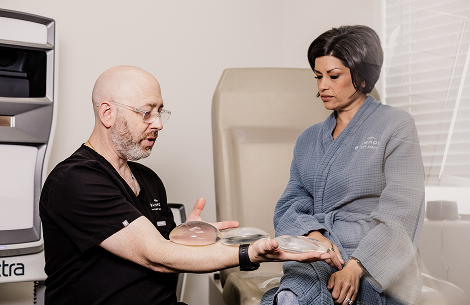

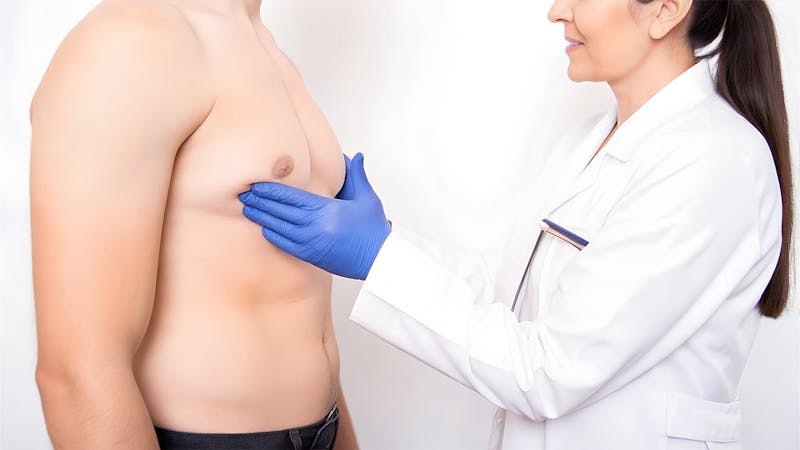
Puffy nipples can show through shirts and make workouts or everyday routines feel awkward. Dr. Michael Baumholtz, a double board-certified Plastic Surgeon in San Antonio, Texas, treats this problem often and explains it plainly. Most cases are a form of gynecomastia, which means extra gland, fat, skin, or a mix, sitting behind or around the areola. It is common and it is treatable. This guide explains what it is, what works, what does not work, and how Dr. Baumholtz plans surgery for a flatter, masculine chest without hype.
What “Puffy Nipples” Are in Medical Terms
Gynecomastia means enlarged male breast tissue. During puberty, a small disc behind the nipple is common and often settles within 6 to 24 months. If it persists for years or begins in adulthood, it rarely goes away on its own.
The three layers he evaluates
- Gland, which is firm and rubbery, and does not shrink with diet or push ups
- Fat, which is softer and may change with weight loss
- Skin, which can stretch and tent the areola
True gynecomastia has a firm subareolar gland. Pseudogynecomastia is fat dominant. Many men have a mix. Correct diagnosis shapes the plan.
Video: Ask A Plastic Surgeon - What Is Gynecomastia
Why Some Nipples Look Puffy
- Hormonal shifts during puberty and the balance of estrogen and testosterone
- Medications such as some anti androgens, prostate medications, older anti ulcer medications, certain antidepressants, and anti seizure medications
- Substances including anabolic steroids, heavy alcohol, and marijuana
- Weight change and skin laxity
- Less common causes such as thyroid, liver, pituitary, or testicular issues
A careful history and exam come first. Unilateral rapid growth, discharge, a hard mass, or significant pain may trigger imaging and endocrine evaluation.
The Consultation: What to Expect
- History, including onset, changes, medications and supplements, and substance use
- Exam, distinguishing gland from fat, assessing skin quality, symmetry, nipple position, and tenderness
- Candidacy, as Dr. Baumholtz does not perform elective surgery for active nicotine users, including vaping. Weight stability and realistic goals matter
- Next steps, since typical cases move to surgery while atypical stories may involve endocrine work up
He does not rely on 3D software for the male chest. A hands on exam and experience guide planning.
What Does Not Work, and What Sometimes Helps
These do not fix a firm gland under the areola: push ups, extra chest days, dieting alone, fat burners, boosters, over the counter creams, massage gadgets, ice, or compression alone. These can change fat or camouflage shape, but they do not flatten a firm gland.
Sometimes there is a role for medication. Short courses such as tamoxifen may be used only in specific settings, like tender early pubertal cases or select drug related situations guided by an endocrinologist. They are not a routine answer for long standing, stable gland.
The Gold Standard: Surgery
Dr. Baumholtz uses two evidence guided paths, matched to the amount of gland and the amount of extra skin.
Option 1: Minimal Incision Surgery
This is the workhorse approach for puffy nipples with mild to moderate skin excess.
How he does it
- Power assisted liposuction to contour fat and smooth the chest
- Through the same small fold openings, a specialized arthroscopic debrider shaves the firm subareolar gland so the nipple can de project
Why he favors it
Tiny hidden incisions, no large circular cut around the areola, treats fat and gland together, avoids a visible crater, no drains in routine cases, and reliable contour.
Option 2: Chest Reduction with Free Nipple Graft
This is for severe cases with large, hanging tissue and major skin excess.
How he does it
- A curving incision along the fold and toward the side chest
- Removal of excess tissue and redraping of the skin
- Replacement of the areola as a skin graft in a flatter position
- Temporary drains in these larger open cases
Anesthesia, Safety, and Where Surgery Happens
- General anesthesia with a board certified anesthesiologist
- Accredited facilities with standard monitoring
- Careful sterile technique, meticulous control of bleeding, and attention to detail
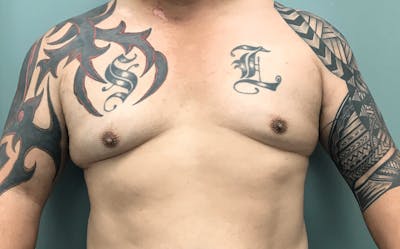
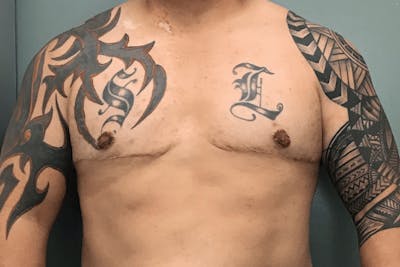
Male Breast Reduction Before and After Photos
Recovery Timeline
Same day: a soft compression vest goes on and walking begins.
Days 1 to 7: bruising and swelling often peak around day 3, then improve. Shower when incisions are sealed. Many return to desk work in 3 to 5 days.
Weeks 2 to 6: compression when awake for 6 weeks helps internal channels collapse and helps the skin conform. Light cardio can resume early. Upper body training usually returns around 6 weeks and then ramps gradually.
Months 3 to 6: swelling fades, definition sharpens, and scars lighten.
Pain plan: a multimodal plan that uses prescription medicine as needed along with non narcotic options, anti nausea medicine, a muscle relaxant, an antibiotic, and a stool softener.
Scar Care
After incisions are sealed, use silicone based products, gentle massage, and sun protection. Microneedling can begin at about 6 weeks if desired. Genetics influence scarring and time helps scars settle.
Expected Results
Most men notice a flatter chest and less nipple projection right away. Final shape refines over 3 to 6 months. The goal is a natural, masculine chest without a scooped out look.
How He Chooses Your Technique
- Tight skin with a defined gland: minimal incision surgery with power assisted liposuction and arthroscopic debrider
- Mild skin excess: often minimal incision first, with a small skin trim later only if needed
- Clear skin excess: open reduction with free nipple grafts, with scars reviewed in detail before surgery
Teens with Puffy Nipples
Pubertal cases often improve within 6 to 24 months. When gland persists, limits activities, or clearly is not regressing, surgery may be reasonable. Timing is individualized and considers maturity, sports and school schedules, and family goals.
Medications, Hormones, and When He Involves Specialists
New or suspect prescriptions, anabolic steroid use, or rapid unilateral growth may prompt coordination with the prescribing doctor and endocrinology. Alarming features such as bloody discharge, a hard mass, or systemic symptoms require further evaluation before any aesthetic plan.
Risks and Complications
Risks are low but not zero. They include bleeding, infection, fluid collection, contour irregularity, nipple sensation changes, scarring, asymmetry, and the possibility of revision. Dr. Baumholtz addresses problems early because earlier treatment is simpler and safer.
Why Men Choose Dr. Baumholtz in San Antonio
- Double board certified in General Surgery and Plastic Surgery, with fellowship training in Hand and Microsurgery
- Known for revision work and for spending real time with patients before and after surgery
- Minimal incision, no drain approach for typical puffy nipples, and comprehensive open techniques when needed
- Direct, plain talk, individualized plans, and long term follow up
- Aesthetic procedures are self pay in this practice
Step by Step: From Consult to Results
- Consultation, including history, exam, and anatomy based options, with endocrine work up if indicated
- Pre op preparation, including stopping nicotine, following medication guidance, arranging help at home, and arranging the garment
- Surgery day, with power assisted liposuction for fat, arthroscopic debrider for gland, or open reduction with free nipple grafts when skin excess is severe
- Early recovery, with compression on and walking the same day, and a first check in within a week. Telemedicine is used when appropriate
- Weeks 2 to 6, with activity building, compression continuing, and scar care beginning once cleared
- Months 3 to 6, with swelling resolving, chest definition refining, and a return to unrestricted activity
FAQs About Puffy Nipples
Can puffy nipples go away in my 20s or 30s
Persistent gland after puberty rarely regresses. Fat may slim with weight loss.
How does he avoid a visible crater
He combines power assisted liposuction with arthroscopic gland debriding through tiny fold incisions, treating fat and gland while preserving a smooth taper.
When can I lift again
Usually around 6 weeks for upper body, after clearance.
Will I need drains
Not for the minimal incision technique. Drains are used mainly for very large open reductions with free nipple grafting.
Do I need hormone tests
Only when the story or exam suggests a hormonal driver or atypical features.
What if steroids or a medication played a role
Stop anabolic steroids. He coordinates with your prescribing physician as needed and may involve endocrinology.
Does he operate on smokers or vape users
No elective aesthetic surgery with active nicotine use. A nicotine free period before and after is required.
Medical References
- Gynecomastia: A systematic review of pharmacological treatments
https://www.frontiersin.org/journals/pediatrics/articles/10.3389/fped.2022.978311/full - Gynecomastia: Etiology, Diagnosis, and Treatment - NCBI - NIH
https://www.ncbi.nlm.nih.gov/books/NBK279105/ - A Dermatological Intervention of Gynecomastia in Young Asian Man with a Case Report
https://www.dovepress.com/a-dermatological-intervention-of-gynecomastia-in-young-asian-man-with--peer-reviewed-fulltext-article-IMCRJ - Gynecomastia: Practice Essentials, Background, Etiology - Medscape
https://emedicine.medscape.com/article/120858-overview - EAA clinical practice guidelines—gynecomastia: Evaluation and management
https://onlinelibrary.wiley.com/doi/10.1111/andr.12636 - Enlarged breasts in men (gynecomastia) - Mayo Clinic
https://www.mayoclinic.org/diseases-conditions/gynecomastia/symptoms-causes/syc-20351793 - Managing Male Mammary Maladies - PubMed Central (PMC)
https://pmc.ncbi.nlm.nih.gov/articles/PMC5758064/
Ready to Talk
If puffy nipples are getting in the way, consider a consultation with Dr. Michael Baumholtz in San Antonio. Expect a direct conversation, an anatomy based exam, and a safe plan tailored to you.
Call: 210 660 5579
Email: info@bplasticsurgery.com
Online scheduling available