

Many women quietly wonder why their breasts look pointy, narrow, or set farther apart than they expected. Dr. Michael Baumholtz, dual board-certified Plastic Surgeon in San Antonio, Texas, hears this description often from patients who have tried every bra and every top yet still feel something about their shape is off. When the lower breast looks empty, the areola seems puffy, and the crease under the breast sits high, the pattern may reflect a developmental difference called tuberous breast deformity. It is not a disease and it is not anyone’s fault. It is simply the way the breast formed during puberty. With a careful exam and a thoughtful plan, Dr. Michael Baumholtz helps women understand what is happening and what can be improved in a safe, predictable way that fits their goals and anatomy.
Recognizing A Unique Breast Shape
Tuberous breasts share a group of features that tend to appear together even if they vary in degree from one person to the next. The base of the breast can feel tight where it meets the chest which limits width and pushes tissue forward into a cone. The lower portion of the breast often lacks roundness and the fold under the breast sits higher than expected. The areola may look stretched or even herniated so it appears puffy. Some women notice a wide space between the breasts while others see meaningful size differences from side to side. These changes usually declare themselves during puberty which is why so many women remember feeling self conscious in high school locker rooms and at the beach. The condition is also called tubular or constricted breasts. Those names describe the same spectrum, not different problems. Mild versions can pass as simple asymmetry. More significant versions are obvious to the patient and to the surgeon the moment the exam begins.
Video: Ask A Plastic Surgeon - More Details About Breast Augmentation
Why Tuberous Breasts Develop
The best explanation is mechanical. A tight ring of tissue at the base of the developing breast limits normal outward expansion. When the gland grows, it moves forward instead of outward which creates a tube like shape with a narrow footprint on the chest. No single gene or lifestyle has been proven to cause it. The pattern is congenital and becomes visible during adolescence as the breast attempts to mature. Some women are affected on one side. Others see it on both. The shape exists on a spectrum and that is why plans must be individualized. What matters most to Dr. Michael Baumholtz is that patients understand this is not caused by anything they did or did not do. Understanding that simple truth often lightens the emotional load before a single stitch is placed.
The Emotional Weight Of Feeling Different
In consultations at Baumholtz Plastic Surgery in San Antonio, women describe years of hiding behind padded bras and high neck clothing. Many avoid fitted dresses or swimsuits because fabric seems to highlight the narrow base and the high fold. Some share that intimacy has become a negotiation with lighting and layers. Even when no one else notices, the person living with tuberous breasts notices every day. This is why a direct conversation with a surgeon who treats the condition regularly can feel like a relief. Putting a name to the pattern matters. Seeing that there are tools to correct shape and position matters even more. For many patients the biggest change after surgery is simple. They stop thinking about their breasts all day and start choosing clothes for style rather than camouflage.
How Dr. Michael Baumholtz Confirms The Diagnosis
Evaluation in San Antonio is calm, private, and thorough. Dr. Michael Baumholtz documents breast width, the height and definition of the inframammary fold, the size and position of the areola, and whether any tissue has herniated through the areola. He measures how far each breast sits from the midline and how the lower pole fills relative to the upper pole. Photos and measurements help map out what is different from typical development. Most important, he explains these findings in plain language. He plans in dimensions rather than cup sizes because cup letters vary wildly from brand to brand. The aim is proportion to the patient’s frame and a result that looks like it belongs. He discusses whether one surgery is likely to achieve the goal or whether a staged plan would be safer and more predictable for tight tissues. He also reviews how choices today affect any future revision which is a key part of his philosophy on long term care.
How Surgeons Classify Tuberous Breasts
Classification systems guide surgical strategy rather than label patients. They describe which quadrants of the breast are tight, how high the fold sits, and how much the areola has herniated. When Dr. Michael Baumholtz in San Antonio creates a plan, he uses these features to decide where to release tight tissue, how far to lower the fold, how to re shape the areola, and whether to add volume with implants, fat, or both. Accurate classification improves communication. It also sets honest expectations about shape change, symmetry, and the chance of needing staged work in very constricted cases. The system is a map. It does not dictate a single route. It helps the surgeon pair the right tools with the specific anatomy in front of him.
Surgical Techniques That Restore Natural Curves
Correction is more than adding volume. It is a reconstruction of shape that restores a natural lower pole and a stable fold, then balances volume in a way that fits the chest. Dr. Michael Baumholtz follows a reliable sequence designed for safety, control, and long term stability.
He begins by releasing the constricted lower pole with deliberate internal scoring. This frees the base of the breast so tissue can expand downward and outward rather than pushing forward in a cone. He carefully lowers and recreates the inframammary fold to a position that suits the patient’s frame. The fold is the foundation of the breast. If it is too high, the breast will always look short and pointy. If it is not supported, the implant can drift. Dr. Michael Baumholtz supports the fold during closure so it stays where it should as healing progresses.
If the areola is stretched or puffy, he reshapes and reduces it to match the new breast dimensions. This step addresses the visual center of the breast and is often just as important to patients as volume. He restores volume with smooth round silicone or saline implants sized to the patient’s base width rather than a target cup size. For most women he prefers a dual plane position beneath the muscle. This softens the chest to breast transition, improves coverage for thin tissues, and can reduce visible rippling. In select cases he augments with targeted fat grafting to blend edges, even out small step offs, or add softness at the cleavage line. When tissues are thin or when larger devices are chosen, he may add an absorbable mesh as internal support. This acts like an internal bra during healing and can help the fold and the pocket hold their shape over time.
He prefers an inframammary incision for control and sterility. He avoids textured implants. He performs meticulous pocket prep with a Betadine based approach and uses a Keller Funnel for insertion to minimize handling. Each detail serves a purpose. The goal is a natural curve that moves with the body and a pocket that remains stable for years.
What To Expect From Surgery In San Antonio
Most patients have surgery under general anesthesia in an accredited setting and return home the same day. They leave in a soft surgical bra with clear instructions and direct contact information. The practice emphasizes availability because early questions are normal and quick answers reduce stress. The first week focuses on comfort, hydration, and short walks around the house. Swelling peaks and then recedes. Discomfort is manageable with prescribed medication and thoughtful pacing. By the second week many women feel ready for desk work and simple errands. Over weeks three and four bruising fades and arm motion becomes easier. At five to six weeks most exercise limits are lifted and normal life resumes with common sense. Shape continues to settle for several months as swelling resolves, tissue stretches, and scars mature. Dr. Michael Baumholtz and his San Antonio team see patients early and often because good follow up supports smooth healing and timely adjustments when needed.
Risks, Limits, And Realistic Expectations
Every operation carries risk. In this group the concerns include bleeding, infection, delayed healing, and changes in nipple sensation which can be temporary or permanent. There are also procedure specific risks such as asymmetry that needs fine tuning, implant malposition, bottoming out if the fold is not stable, and capsular contracture which is a tightening of the scar tissue around an implant. Tight tissues sometimes require staged work to achieve the best shape and softness. Dr. Michael Baumholtz works to lower risks with careful pocket preparation, Betadine irrigation, funnel insertion, dual plane positioning when appropriate, and selective mesh support in higher risk settings. He does not promise perfect. He promises diligence, attention to detail, and a clear plan if adjustments are required. Patients help by following restrictions, wearing the support garment as advised, attending follow ups, and reporting concerns early. A shared plan and steady communication produce better outcomes.
Why Choose Dr. Michael Baumholtz In San Antonio
Dr. Michael Baumholtz is board certified in General Surgery and Plastic Surgery and completed additional fellowship training in hand and microsurgery. He is known for revision breast work and for managing complex cases referred by other practices. He plans by base width rather than cup size because proportion is more reliable than letters on a tag. He favors inframammary incisions for control and future flexibility, uses smooth round implants from brands he trusts, and avoids textured shells. He speaks plainly and encourages patients to share photos that represent their goals so he can align those goals with anatomy and safety. He does not take insurance for aesthetic breast surgery. He sees the operation as one part of a longer relationship that includes access to the surgeon before and after surgery, because results are not just created in the operating room. They are protected by follow up and partnership.
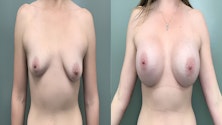
Breast Augmentation Before and After Photos
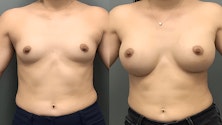
Life After Tuberous Breast Correction
The mirror tells part of the story. A rounder lower pole appears. The areola sits balanced on the breast mound. The fold looks natural and stable. The rest of the story shows up in daily life. Clothes fit with less effort which makes shopping less of a chore and more of a choice. Beach days and gym classes feel normal. Intimacy carries less worry and more ease. Scars soften with time and care. Implants require surveillance and may require exchange in the future, which is a normal part of implant based breast surgery. Ongoing follow up protects breast health, monitors implant status, and keeps the pocket stable. For many San Antonio patients the most valuable outcome is a quiet mind. They stop planning outfits to hide their chest and start planning outfits they actually want to wear.
Preparing For Your Consultation
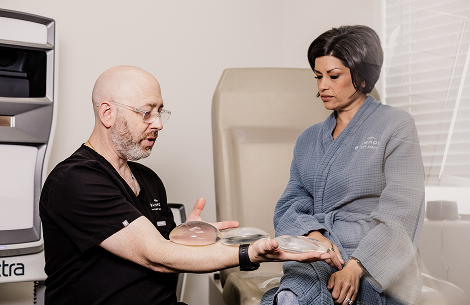
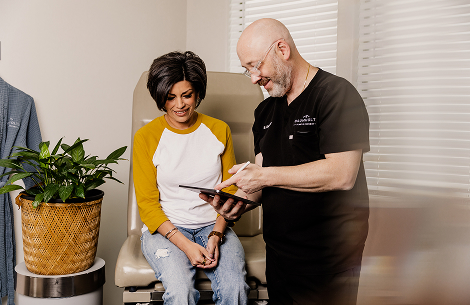
A good consultation balances listening and teaching. At Baumholtz Plastic Surgery in San Antonio, Dr. Michael Baumholtz begins with the patient’s own words. He wants to know what bothers her, what she hopes to change, and how life might look different after healing. He reviews medical history, examines the chest wall and breast tissue, and explains how each anatomical feature influences the plan. He discusses incision options but usually recommends an inframammary approach for control and sterility. He reviews implant choices and explains why base width and soft tissue coverage guide the decision more than a number on a tag. He also explains when fat grafting can add value and when it adds little. If a staged plan would create a safer or more predictable path in a very tight breast, he says so plainly. If a single stage is appropriate, he outlines that step by step. The visit ends with practical guidance on timing, recovery, activity restrictions, and support at home. The goal is clarity. The patient leaves with a plan that makes sense.
Breastfeeding, Sensation, And Long Term Care
Women often ask how surgery might affect breastfeeding and sensation. The honest answer is that many women with tuberous breasts start with less glandular tissue which can reduce milk production regardless of surgery. When future breastfeeding is a priority, Dr. Michael Baumholtz typically favors an inframammary incision and a dual plane pocket to limit disruption of ducts. Sensation can change after any breast surgery. Most patients see sensation return over time although some experience persistent changes. Long term care includes periodic exams, education on self awareness, and timely imaging when appropriate. If implants are placed, surveillance continues on a regular schedule. The practice encourages a steady relationship because small adjustments made early can prevent larger problems later.
Setting Expectations For Symmetry
Perfect symmetry is not a realistic promise for any breast surgery and that is especially true for tuberous correction where the starting point can be very uneven. Dr. Michael Baumholtz reviews where asymmetry is likely to persist such as chest wall shape, rib prominence, and natural differences in tissue stretch. He plans to minimize visible differences while protecting safety and soft tissue health. He may recommend different implant volumes or different maneuvers on each side to meet in the middle. He documents what will be corrected and what will be improved but not eliminated. This level of candor supports trust, and trust supports better choices before and after surgery.
The San Antonio Experience
Having surgery in San Antonio, Texas, offers practical advantages. Many patients live within a short drive which simplifies early follow ups and activity restrictions. The climate encourages light walks year round which supports circulation during the first weeks. Family and friends nearby can help with rides, meals, and simple tasks while energy returns. Dr. Michael Baumholtz and his team coordinate timing around work and family obligations because good planning lowers stress and improves recovery. Patients describe the experience as personal and steady which mirrors the surgeon’s approach in the operating room.
Take The First Step
If your breasts look pointy, narrow, or far apart, a private consultation with Dr. Michael Baumholtz in San Antonio can bring clarity and a concrete plan. He will review your goals, examine your anatomy, and explain in plain language what is safe and achievable for you. His focus remains steady throughout the process. He aims for proportion, durability, and results that look like you.
FAQs About Tuberous Breast Correction In San Antonio
Could a breast that looks pointy only in a swimsuit still be tuberous?
Yes. Swimwear can compress the upper pole and make a narrow base or a high fold more obvious. A focused exam at Baumholtz Plastic Surgery confirms whether true base constriction and areolar herniation are present or if the issue is simply how a particular garment fits.
If my areolas are very puffy, does that always mean an implant is required?
Not always. Areolar herniation can be improved by lowering the fold, releasing the lower pole, and reshaping the areola. An implant helps expand tight tissue and restore volume, but some mild cases can rely on tissue release and targeted fat grafting when goals are modest.
Can a dual plane pocket help breasts that sit far apart on my chest?
It can improve contour and encourage lower pole expansion, yet chest width still sets the baseline gap. Technique refines what anatomy allows rather than erasing skeletal width. Dr. Michael Baumholtz explains this in detail so expectations are aligned with what the body will support.
Will lowering the fold always fix the pointy look?
Lowering the fold is essential, but it works best when combined with proper release of the constricted lower pole and reshaping of the areola when needed. Doing one maneuver without the others may fall short because the problem is multidimensional.
Is mesh support ever useful in a first time tuberous breast correction?
Yes. In thinner patients or when larger implants are chosen, an absorbable mesh can provide internal support while tissues heal. It is not required for every case. Dr. Michael Baumholtz recommends it selectively when he believes it will help the fold and pocket hold their intended shape.
If I hope to breastfeed in the future, how is the plan adjusted?
Timing and incision choices matter. When future breastfeeding is a priority, an inframammary incision and a dual plane pocket can minimize disruption of ducts. Even with careful planning, no approach can guarantee lactation because baseline glandular tissue varies from person to person.
How does Dr. Baumholtz reduce the chance of capsular contracture in these cases?
He uses an inframammary incision, meticulous pocket prep with a Betadine based protocol, Keller Funnel insertion to limit handling, and submuscular or dual plane positioning when appropriate. These steps aim to reduce bacterial load, improve coverage, and support long term softness.
Medical References
- Anatomy of the nipple and breast ducts - Zucca-Matthes, 2016
https://gs.amegroups.org/article/view/7703/html - Overview, Vascular Anatomy and Innervation of the Breast - Medscape, 2025
https://emedicine.medscape.com/article/1273133-overview - Anatomy, Thorax, Breast - StatPearls - NCBI Bookshelf, 2023
https://www.ncbi.nlm.nih.gov/books/NBK519575/ - Anatomy and physiology of the breast - Bazira, 2022
https://www.sciencedirect.com/science/article/abs/pii/S026393192100260X - Breast Anatomy: Milk Ducts, Tissue, Conditions & Physiology - Cleveland Clinic, 2025
https://my.clevelandclinic.org/health/articles/8330-breast-anatomy - A reinterpretation of human breast anatomy includes all the layers of the anterior body wall - Hall, 2024
https://anatomypubs.onlinelibrary.wiley.com/doi/full/10.1002/ar.25456 - Anatomy, Thorax: Mammary Gland - StatPearls - NCBI Bookshelf, 2025
https://www.ncbi.nlm.nih.gov/books/NBK547666/
Ready To Talk With Dr. Michael Baumholtz In San Antonio
Choosing to address tuberous breasts is a personal decision that deserves honest guidance and a clear plan. Dr. Michael Baumholtz, dual board-certified Plastic Surgeon in San Antonio, Texas, invites you to sit down for a private conversation about goals, timing, and safety. During a consultation he reviews your anatomy, explains practical options, and outlines a step by step approach that fits your life. There is no pressure. There is only education, transparency, and a path you can feel good about.
To schedule your consultation with Dr. Michael Baumholtz at Baumholtz Plastic Surgery in San Antonio, call 210-660-5579 or email info@bplasticsurgery.com. If you prefer, submit the appointment request form on this page and the team will reach out to help with next steps. Your next step starts with a simple conversation guided by a Plastic Surgeon who values safety, proportion, and results that look like you.