
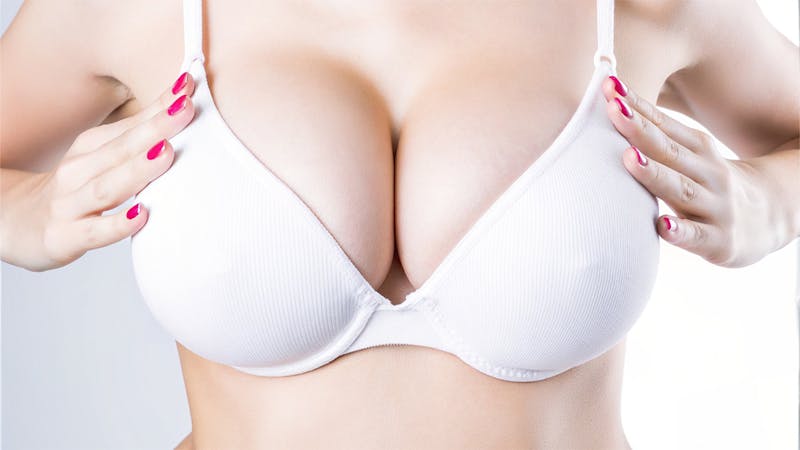
Women across the United States often carry the quiet burden of overly large breasts. The weight is physical and emotional. It affects posture, wardrobe, workouts, and how someone feels in a room full of people. Dr. Michael Baumholtz, Plastic Surgeon in San Antonio, Texas, meets women in this situation every week at Baumholtz Plastic Surgery. As a dual board‑certified surgeon known for careful listening and meticulous technique, he focuses on clear explanations, realistic goals, and safe, predictable plans. His message is steady and practical: when large breasts limit daily comfort or function, there is a thoughtful, evidence‑based path forward.
What Really Causes Overly Large Breasts
Breast size is not a single story. It is a mix of genetics, hormones, body composition, and life events. In San Antonio, Dr. Michael Baumholtz begins by mapping that story and separating myths from facts. Macromastia is the medical term for disproportionately large breasts. Symptoms have been documented in clinical research for decades. Common reports include deep grooves from bra straps, skin irritation beneath the fold, numbness or tingling in the arms from nerve compression, and persistent neck, back, and shoulder pain. These are predictable results of excess weight and constant tissue strain.
- Genetics often sets the baseline. If a mother or sister developed large breasts early, daughters may follow a similar pattern.
- Hormone shifts add volume at predictable points-puberty, pregnancy, and menopause.
- Weight changes matter because the breast contains fatty and glandular tissue, but the relationship is inconsistent. Some slender women still carry heavy breasts; others see only modest changes with weight loss.
There are also rare medical drivers. Gigantomastia describes extreme, sometimes sudden enlargement. Thyroid disorders, certain medications, and endocrine abnormalities can influence size in select cases. When growth is abrupt or asymmetric, Dr. Baumholtz coordinates an appropriate medical work‑up with a primary care physician or specialist to rule out underlying disease. Care begins with safety.
Video: Markings For A Breast Reduction - Dr Baumholtz
How Oversized Breasts Change Daily Life
The physical picture is familiar. The chest shifts the body’s center of gravity forward. Neck and shoulder muscles overwork to hold that weight. The upper back compensates. Headaches, spasms, and fatigue build with time. Skin folds stay warm and moist, which encourages fungal and bacterial irritation. Rashes come and go. Hot weather makes everything worse. The gym becomes a battleground of motion and discomfort, even in a supportive bra. The combination of size, motion, and inadequate support reduces activity and enjoyment of exercise.
The social impact often arrives later. Unwanted attention during adolescence leaves a mark. Shopping feels difficult when tops gap or pull. Professional clothing can feel revealing even when it is not. Many women describe the sensation of being defined by one body part. Dr. Baumholtz addresses this openly. He reminds patients there is nothing frivolous about wanting comfort, function, and proportion. Those are legitimate health goals.
Where Conservative Care Fits In
Before surgery, many women try non‑operative steps:
- Professional bra fitting with wide straps and a reinforced band
- Physical therapy to strengthen supportive muscles and improve posture
- Topical treatments and careful hygiene to manage rashes
- Nonsteroidal medications or muscle relaxants for pain
Each tool can help for a while. None of them remove the actual weight. When symptoms persist, the limits of conservative care become clear, and the question shifts from coping to correcting. That is the point where a consultation with Dr. Michael Baumholtz in San Antonio is most helpful.
Breast Reduction Surgery in San Antonio: What It Does and Why It Works
Breast reduction (reduction mammaplasty) removes excess skin, fat, and glandular tissue, then reshapes and supports the breast at a smaller, balanced size. The operation is designed to ease symptoms, improve mobility, and create proportion across the chest. Tissue is removed. The breast is reshaped. The nipple and areola are lifted and preserved on a carefully planned blood supply. The goal is a lighter, more comfortable breast that fits the person wearing it.
Evidence mirrors what many patients feel early on: neck, shoulder, and back pain improve quickly. Rashes resolve when the fold is dry and ventilated. Standing straighter feels natural. Formal patient‑reported studies show large, sustained gains in physical well‑being, psychosocial well‑being, sexual well‑being, and satisfaction with breasts after reduction-and those improvements persist for years.
Technique Matters, But Safety and Fit Matter More
Dr. Baumholtz selects the technique around a woman’s anatomy, goals, and skin quality.
- Wise pattern (anchor pattern): often used for significant reductions.
- Vertical or “lollipop” pattern: considered for moderate reductions with good skin quality.
- Adjunct liposuction: in select patients with mostly fatty tissue and excellent skin elasticity, limited liposuction can refine the side of the chest where bra bands and athletic wear sit.
Incision choice is a tool, not a promise. The shared objective is to preserve sensation when possible, maintain a reliable blood supply to the nipple-areola complex, and shape a proportional breast that fits the person’s frame.
Sensation after reduction is a common question. Preserving nerve pathways is a surgical priority, but overall satisfaction tends to track more with symptom relief and the breast shape that is achieved.
The Consultation with Dr. Michael Baumholtz
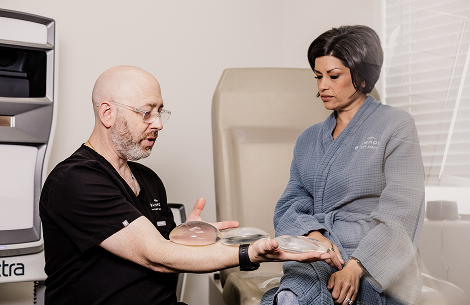
The first visit is a conversation, not a sales pitch. Dr. Baumholtz takes a detailed history and focuses on what hurts, what helps, and how symptoms limit the day. He examines breast size, skin quality, nipple position, and posture. He reviews medical history and medications. He discusses prior pregnancies and future plans. He explains how hormone shifts, weight changes, and age can influence long‑term breast shape. He also confirms that nicotine and vaping must stop pre‑operatively because they impair blood flow and wound healing. Patients leave with a plan that reads like a roadmap.
Insurance, Payment, and Documentation
Breast reduction for symptomatic macromastia is often covered by insurance when plans define it as medically necessary. Many insurers use tools such as the Schnur Sliding Scale (which compares body surface area to the weight of tissue removed) and require documentation of symptoms and prior conservative care. Dr. Baumholtz does not take insurance, and many of his patients choose to proceed as self‑pay. Some do so because of high deductibles or plan exclusions. During consultation, he explains how insurers typically review these cases, why those rules exist, and how his office documents symptoms and exam findings even when patients pay out of pocket.
A Clear, Step‑By‑Step Surgical Day
Surgery takes place in an accredited facility with board‑certified anesthesia. Comfort and safety begin before the first incision. After careful skin preparation, Dr. Baumholtz marks landmarks in the upright position to plan breast footprint, fold position, and nipple height. During surgery he preserves reliable blood supply to the nipple-areola complex, removes excess tissue according to the plan, shapes an internal framework for projection, and closes in layered fashion to support healing. All removed tissue is routinely sent to pathology for analysis. His approach reflects years of breast surgery experience and the same patient‑first principles he applies across his practice.
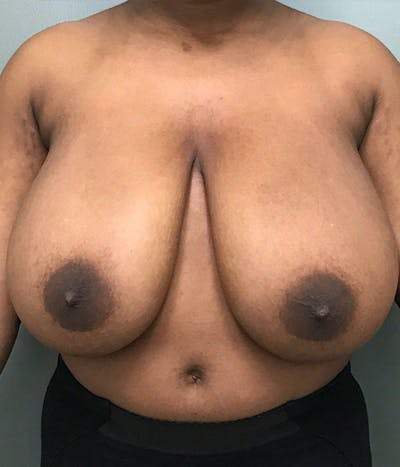
Breast Reduction Before and After Photos
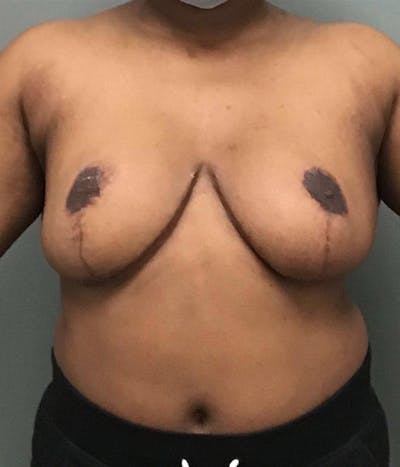
Recovery That Favors Steady Progress
Healing is structured but humane.
- First week: alternate rest and short walks. A soft surgical bra supports the chest without underwires. Swelling peaks around day three and then declines.
- About two weeks: many feel ready to drive and return to desk work if energy and mobility allow.
- Weeks 2-6: light cardio and gentle stretching as comfort improves.
- Around six weeks: most exercise restrictions lift.
- Scars start pink, then fade with time. Dr. Baumholtz discusses sun protection, massage, and silicone‑based scar care once incisions are sealed and dry.
He sees patients regularly in San Antonio to track symmetry, sensation, and scar quality, and remains available between visits if questions arise.
Realistic Expectations in Plain Language
No operation is without risk. Possible issues include bleeding, infection, delayed wound healing, asymmetry, changes in sensation, and the need for revision. Scars are permanent and will be visible without clothing. Dr. Baumholtz explains these realities with the same honesty he would use with a family member. He does not promise a dress size or cup size. He talks in terms of fit, balance, and relief. Surgery handles the mechanics; biology handles the healing.
Breastfeeding after reduction is nuanced. Many women can breastfeed and some cannot-with or without prior surgery. Technique choices can respect the anatomy of milk ducts, but there is no way to guarantee future function. Younger patients who view future breastfeeding as mission‑critical should consider timing carefully. The conversation is individualized.
Why Many Patients Describe “A Weight Off Their Shoulders”
Across the country and in San Antonio, patients describe the same set of changes after breast reduction: standing tall without trying; breathing deeply; enjoying a run on the Mission Reach or a stroll on the River Walk without a second thought about bounce or straps; and shopping without planning alterations. Patient‑reported studies show large improvements in quality of life and satisfaction after reduction compared with pre‑operative scores, and those improvements hold over time. This is why reduction mammaplasty is one of the most consistently satisfying procedures in plastic surgery.
How Dr. Michael Baumholtz Thinks About Scars, Symmetry, and Longevity
Scars fade but do not disappear. Dr. Baumholtz plans incisions to sit in natural shadows and under most garments. He sets nipple size and position to match the breast and body-not a trend. He shapes internal support for projection so the breast looks like a breast, not a flat mound. He explains how gravity, age, weight change, and pregnancy can influence shape in the future. Small asymmetries are normal in natural breasts and remain normal after surgery. When touch‑ups make sense, timing is deliberate and expectations are clear.
What Makes Care with Dr. Michael Baumholtz Different
Patients meet their surgeon early and often. Dr. Baumholtz schedules time to understand goals and boundaries. He does not rush, and he does not delegate important conversations. He is board‑certified in General Surgery and Plastic Surgery and completed fellowship training in Hand and Microsurgery. That background matters in revision cases and in the judgment calls that good outcomes require. The practice values long‑term follow‑up. The phone is answered. The portal is monitored. That is how trust is built.
The First Step in San Antonio
The most important part of this journey is the first honest conversation. For some, that means naming the problem. For others, it means hearing a surgeon explain what is possible and what is wise. Dr. Michael Baumholtz will meet you there. He will describe how and why reduction works, what recovery looks like in real life, and how to prepare your body and home so healing is as smooth as possible.
FAQs About Causes and Treatment of Overly Large Breasts
How does Dr. Baumholtz decide which incision pattern is best for me?
He examines breast size, skin quality, and nipple position, then chooses the pattern that safely lifts and reshapes while preserving a reliable blood supply. Wise pattern and vertical techniques are both used. The choice is individualized.
Will breast reduction really help me get back to running on the River Walk without pain?
Many patients report that exercise feels easier and more enjoyable once weight and motion are reduced. Reducing excess tissue can improve posture, decrease bounce, and allow more comfortable movement.
I have deep shoulder grooves and year round rashes under my breasts. Are those medical signs of macromastia?
Yes. Shoulder strap grooves, intertriginous rashes, and numbness or tingling from nerve compression are common with macromastia and often improve after reduction.
If I plan to have children later, should I wait to see Dr. Baumholtz for a consultation?
A consult now is useful even if surgery is later. He will explain how pregnancy, weight change, and breastfeeding plans could affect timing and technique so you can choose the right moment for your life.
What does recovery look like if I need to get back to work in downtown San Antonio?
Most patients return to desk work in about two weeks, with light walking right away and gradual increases in activity. A supportive, non underwire bra is worn during early healing, and activity limits typically ease around the six week point if progress is steady.
I heard about the Schnur scale. Does it decide whether I qualify for surgery?
The Schnur Sliding Scale is a tool some systems use to judge medical necessity by comparing body surface area and grams removed. It does not define your symptoms or your need for relief. Dr. Baumholtz will review your history and goals, explain how the scale is used, and focus on a plan that addresses your specific concerns.
Are satisfaction rates really as high as people say after breast reduction?
Yes. Patient reported outcomes consistently show significant, lasting improvements in quality of life and satisfaction after reduction, which matches what Dr. Baumholtz hears from his San Antonio patients during long term follow up.
Medical References
- Gestational Gigantomastia: A Systematic Review of Case Reports - Himalayan Institute of Medical Sciences - https://pmc.ncbi.nlm.nih.gov/articles/PMC5367223/
- An idiopathic gigantomastia - Department of Gynecology and Obstetrics, Korea - https://pmc.ncbi.nlm.nih.gov/articles/PMC4347046/
- The role of oestrogen and progesterone receptors in gigantomastia - Archives of Medical Science - https://www.archivesofmedicalscience.com/The-role-of-oestrogen-and-progesterone-receptors-in-gigantomastia,108691,0,2.html
- Unilateral gestational gigantomastia in the third trimester - ScienceDirect - https://www.sciencedirect.com/science/article/pii/S2949916X24000367
- Management of Gigantomastia: A Review of Two Cases - EJMED - https://eu-opensci.org/index.php/ejmed/article/view/41351
- A multi-disciplinary approach to gestational gigantomastia - Annals of Surgery Journal - https://asj.amegroups.org/article/view/79780/html
- Reduction Mammoplasty in Gigantomastia Using the - SAGE Journals - https://journals.sagepub.com/doi/10.1177/30499240251344117
Next Steps
If overly large breasts are limiting comfort, activity, or daily function, schedule a private consultation with Dr. Michael Baumholtz in San Antonio, TX. His team will listen, examine, and design a plan that fits your life. Call 210‑660‑5579 or email info@bplasticsurgery.com to reserve a visit at Baumholtz Plastic Surgery.