
Choosing where a breast implant sits is one of the most consequential decisions in augmentation. Placement determines not only the early look and feel, but also how the breast ages, how stable the result is over time, how the implant interacts with exercise, and how easy future revisions may be. In San Antonio, Dr. Michael Baumholtz approaches pocket selection with a practical, anatomy‑first mindset. He weighs tissue quality, implant dimensions, and long‑term plans rather than chasing trends. While he uses all three major pockets when appropriate, dual‑plane is his preferred and most frequently used option for primary cosmetic augmentation in suitable candidates.
This guide reviews the three main placements - subglandular, submuscular, and dual‑plane - what each offers, who they suit best, and how Dr. Baumholtz makes these choices with patients. The focus is deliberately narrow and on‑topic: implant placement for cosmetic breast augmentation.
The Anatomy That Drives Pocket Choice
Sound decisions start with anatomy and implant geometry. Several features matter:
- Breast base width (BBW): The measured width of the breast footprint on the chest. Implant width should match BBW to avoid “too wide” or “too narrow” looks and side‑boob or cleavage issues.
- Tissue thickness and quality: Thinner upper‑pole tissue benefits from more coverage; stretchier lower‑pole tissue needs controlled expansion.
- Skin envelope and ptosis (droop): Mild droop can often be addressed with pocket strategy; more significant droop may need a lift, either staged or combined.
- Pectoralis major behavior: The muscle’s origin, insertion, and how it moves during everyday activity affect animation risk and implant position.
- Ribcage shape and symmetry: Curvature, prominence, and side‑to‑side differences subtly influence final appearance.
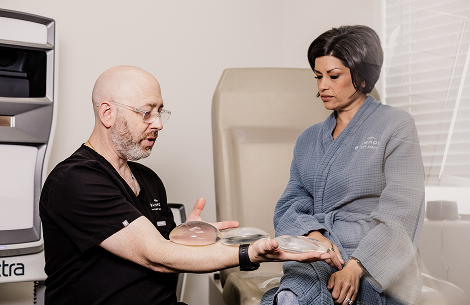
- Implant dimensions: Width, projection, and gel firmness determine how a device occupies a chosen pocket.
Dr. Baumholtz measures, examines, and then matches the implant and pocket to the patient’s tissues, not to a desired bra size. That is central to his approach.
Video: Ask A Plastic Surgeon- Differences Between Putting Implant Above or Below The Muscle
Option 1: Subglandular (Above the Muscle)
Definition: The implant sits behind the breast tissue but above the pectoralis major. The pec does not cover the implant.
Where it shines: Patients with ample native tissue who intentionally want a more “augmented” look or select revision scenarios where previous dissection or vascular considerations steer the decision.
Advantages
- Shorter early recovery for some, with less tightness from muscle elevation.
- No implant animation with pec contraction because the muscle is uninvolved.
- Direct lower‑pole expansion without muscle resistance, which can help create a rounder lower curve when tissue is thick enough to hide the device.
Trade‑offs
- Edge visibility and rippling are more likely in thinner patients, especially at the upper pole and outer breast.
- Soft‑tissue support is limited to skin and breast tissue; without muscle coverage, the result can sometimes appear harsher up top over time.
- In certain patients, capsular contracture risk may be higher than with submuscular variants.
Dr. Baumholtz’s take: Subglandular is not a first‑line pocket in his practice for primary cosmetic augmentation. He reserves it for specific goals or revisional needs where its benefits clearly outweigh its limitations. Candid conversations about tissue thickness and long‑term support are essential before choosing this route.
Option 2: Submuscular (Full Under‑the‑Muscle)
Definition: The implant is placed fully beneath the pectoralis major. True “total” coverage may be limited by anatomy at the lower inner pole, but the concept is full muscular coverage.
Where it shines: Very thin patients who require maximal camouflage of the upper implant or reconstructive settings where additional soft‑tissue coverage is paramount.
Advantages
- More coverage over the upper pole helps disguise implant edges and ripples in low‑coverage patients.
- Gentler upper‑pole transition than subglandular in many body types.
Trade‑offs
- Animation deformity: The implant can shift or distort when the pec contracts - noticeable in activities like push‑ups, some yoga positions, or weightlifting.
- Early recovery may feel tighter while the muscle adapts. Most patients return to normal function, but it takes time.
- If the inferior pectoral origin is not properly managed, implants can ride high, limiting lower‑pole expansion and requiring revision.
Dr. Baumholtz’s take: Submuscular is a useful tool for select patients but not his routine choice for primary cosmetic augmentation. He reaches for it when tissue coverage demands are extreme or when specific reconstructive or revisional considerations apply.
Option 3: Dual‑Plane (Upper Under Muscle, Lower Under Breast Tissue)
Definition: The upper portion of the implant remains covered by pectoralis major, while the lower portion is released to sit beneath breast tissue. This controlled release allows the implant to shape the lower pole while maintaining upper‑pole coverage.
Where it shines: Mild ptosis, thinner upper‑pole tissue, postpartum or weight‑change breasts, and most primary augmentations seeking a natural slope with lower‑pole fullness.
Advantages
- Best of both worlds: Upper‑pole coverage for softness/camouflage and lower‑pole shaping for attractive expansion.
- Versatility: Useful in subtle asymmetries and common revisional scenarios, offering multiple degrees of release to fine‑tune lower‑pole behavior.
- Aging gracefully: For many patients, dual‑plane maintains a natural transition up top while supporting durable lower‑pole contour.
Trade‑offs
- Some animation can still occur, although many patients notice less than with full submuscular.
- Technically more nuanced: precision in release and implant selection is crucial.
Dr. Baumholtz’s take: Preferred and most frequently used pocket for primary cosmetic augmentation. It pairs predictable aesthetics with long‑term flexibility should needs change.
How Dr. Baumholtz Chooses - A Practical Framework
- Measure BBW, pick a device that fits. Width match is non‑negotiable. Projection and gel cohesivity are then tailored to the look and tissue support needed.
- Assess tissue thickness. Thin upper‑pole? Favor muscle coverage (dual‑plane or submuscular) to soften transitions and hide edges.
- Evaluate droop and skin behavior. Mild ptosis often responds to dual‑plane. Clear, significant droop usually needs a lift; pocket alone won’t fix it reliably.
- Factor in lifestyle and athletics. Heavy pec training may push toward dual‑plane with careful counseling about animation - and, in a few cases, toward subglandular if tissue is thick and animation is a deal‑breaker.
- Think five and ten years ahead. Ease of revision, likelihood of needing a lift, and how tissues will change are part of the initial plan.
He uses inframammary fold (IMF) incisions for most cases because they provide a clean, reproducible approach and simplify future revisions or lifts. He favors smooth implants, uses a Keller Funnel for insertion, and employs betadine prep as part of a contamination‑reduction protocol. For select thin patients or larger devices, he may recommend absorbable mesh to supplement soft‑tissue support.
Animation Deformity: What Patients Need to Know
Animation refers to visible implant movement or shape change when the pectoralis contracts. It is most associated with submuscular pockets but can appear in dual‑plane to a lesser degree. Dr. Baumholtz reviews this carefully with patients who lift weights, climb, or have jobs with frequent upper‑body exertion.
- How noticeable is it? It varies. Some patients barely notice; others find it bothersome during certain movements or when flexing intentionally.
- Does it weaken the chest? Permanent weakness is uncommon with proper technique and rehab. Early soreness is expected; long‑term strength usually returns.
- Can it be fixed later? Options include pocket modification (e.g., converting to subglandular or adjusting the release) in the right tissue environment. The best strategy is selecting the right pocket at the start.
Imaging, Screening, and Future Health Considerations
Placement can influence the way breasts are imaged.
- Mammograms & ultrasound: Submuscular and dual‑plane pockets may interfere less with imaging in some women due to the implant’s relative position. Radiologists use specialized views for women with implants regardless of pocket.
- MRI: Useful in specific circumstances and for silicone implant surveillance when indicated.
- Family history: For patients with strong family histories or higher screening needs, Dr. Baumholtz discusses how pocket and implant choice intersect with imaging over a lifetime.
He emphasizes that screening continues after augmentation; patients should follow age‑appropriate guidelines in coordination with their primary care and radiology teams.
Breastfeeding and Sensation
Implant placement (above vs. below the muscle) is usually less important than incision location and an individual’s baseline ductal anatomy for breastfeeding potential. Many women breastfeed successfully after augmentation. That said, no surgeon can guarantee milk supply or complete preservation of nipple‑areola complex sensation. Dr. Baumholtz discusses goals, timing, and trade‑offs with anyone planning near‑term pregnancy.
Capsular Contracture, Rippling, and Long‑Term Maintenance
Every implant forms a capsule. In a small percentage, that capsule tightens in a way that changes shape or feel.
- Pocket influence: Submuscular and dual‑plane pockets may have different contracture profiles than subglandular in some patients, though contracture is multifactorial.
- Device handling and placement: Meticulous technique, pocket control, and contamination reduction strategies matter. Hence his use of IMF incisions, funnel insertion, and antiseptic protocols.
- Rippling: More likely when tissue coverage is thin and the gel is softer; coverage (dual‑plane or submuscular) can help camouflage. Correct implant sizing to BBW also reduces edge visibility.
He counsels patients to expect long‑term follow‑up and to plan for the possibility of revision at some point in the future, not because something “went wrong,” but because tissues and goals evolve.
Breast Augmentation Before and After Photos
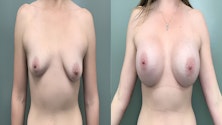
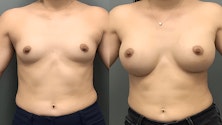
Recovery: What Truly Differs by Pocket
Most healthy patients return to daily living quickly, but pocket selection shapes the early weeks:
- Subglandular: Often less initial muscle soreness and fewer motion restrictions. However, thin patients can see edges sooner, which may prompt earlier discussions of revision if the look isn’t acceptable.
- Submuscular: Expect tighter early feel and more awareness with arm movements until the muscle adapts. Animation may be observed as activity ramps up.
- Dual‑plane: Typically falls between the two. Many patients find the balance of comfort, motion, and early aesthetics favorable.
Regardless of pocket, Dr. Baumholtz outlines a structured return to activity, emphasizing gentle motion, posture, and scar care. He individualizes timelines based on job demands and training goals.
Special Situations & Revisions
- Post‑pregnancy changes: Dual‑plane often addresses upper‑pole deflation with controlled lower‑pole shaping. If there is meaningful ptosis, a lift may be combined or staged.
- Weight fluctuations: Significant weight loss or gain alters breast tissue. Pocket plans prioritize durability and later adjustability.
- Athletes and lifters: He reviews animation frankly. Where animation would be unacceptable and tissue is thick, subglandular may be considered; otherwise dual‑plane with careful technique is common.
- Asymmetry: Pocket adjustments, small changes in release, and implant selection can help balance subtle asymmetries.
- Secondary surgery: Conversions between pockets (e.g., subglandular → dual‑plane or submuscular → dual‑plane) are common revision pathways when needs change.
Myths, Debunked
- “Subglandular always looks fake.” Not universally true. In thicker tissues with the right implant, it can look proportionate. The challenge is durability of the look as tissues thin with time.
- “Submuscular always guarantees a natural result.” Technique, implant width, and tissue behavior matter as much as coverage.
- “Dual‑plane eliminates animation.” It reduces animation for many, but it does not make it impossible. Expect transparency about trade‑offs.
- “Cup size is the plan.” Bra sizing is inconsistent. Dr. Baumholtz plans around measurements and proportion, not letters on a tag.
What a Consultation Looks Like with Dr. Baumholtz
- History and goals: What bothers the patient now; what look they admire - especially on body types similar to theirs.
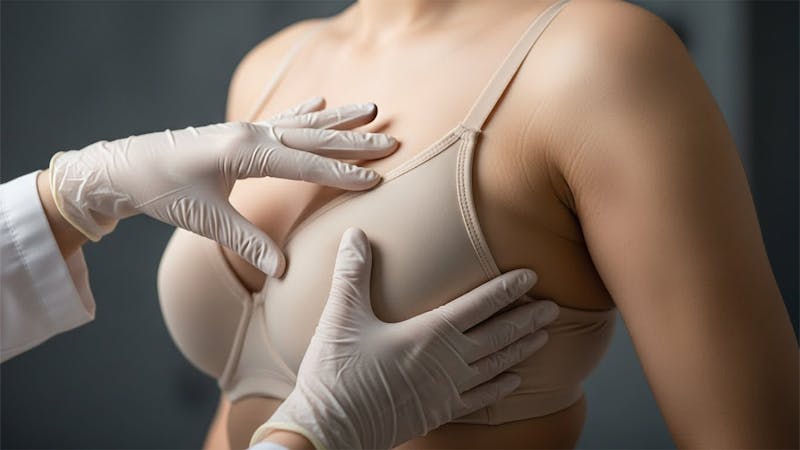
- Exam and measurements: BBW, tissue thickness, skin quality, asymmetry mapping.
- 3D imaging (VECTRA®): Used to illustrate ranges of likely outcomes and help align expectations.
- Pocket and implant discussion: How each option would behave in this body, now and in five to ten years.
- Risk review: Capsular contracture, infection, bleeding, changes in sensation, need for revision - no sugar‑coating.
- Plan and aftercare: Incision, pocket, device choice, activity timeline, and long‑term follow‑up.
The guiding principle is simple and consistent: “What you want + what I can deliver = our plan.” He does not promise perfection. He offers clear expectations, technical skill, and long‑term partnership.
FAQs About Breast Implant Placement
Does placement change cancer screening?
Radiology teams use specialized views for women with implants. Submuscular and dual‑plane pockets can make some views easier in certain patients. Individual risk and screening schedules are discussed with primary care and radiology.
Will my chest be weaker with dual‑plane or submuscular?
Long‑term weakness is uncommon when surgery is performed correctly and rehab is followed. Expect normal early soreness and a gradual return to full activity.
If I choose "wrong," can it be changed?
Yes. Revisions can convert pockets or adjust releases. This is one reason Dr. Baumholtz plans with the future in mind and follows patients long term.
Which pocket feels most natural?
"Natural" depends on tissue thickness, implant dimensions, and aesthetic goals. Dual‑plane frequently yields the softest upper‑pole transition with a well‑shaped lower pole in primary cosmetic cases - hence his preference - yet exceptions exist.
Is one pocket safest?
Safety comes from appropriate patient selection, meticulous technique, and aftercare. Each pocket has distinct risks and benefits; the safest pocket is the one that best fits a patient's anatomy and goals.
Medical References
- Current Status of Pre- or Subpectoral Breast Reconstruction in Japan. https://pmc.ncbi.nlm.nih.gov/articles/PMC10788569/
- Asian Breast Augmentation: A Systematic Review. https://journals.lww.com/prsgo/fulltext/2015/11000/asian_breast_augmentation__a_systematic_review.2.aspx
- Protocol for a Multicentre, Prospective, Cohort Study to Evaluate Satisfaction and Quality of Life After Immediate Breast Reconstruction. https://bmjopen.bmj.com/content/11/2/e042099
- The Japanese Breast Cancer Society Clinical Practice Guidelines for Breast Cancer (2022 Edition). https://pmc.ncbi.nlm.nih.gov/articles/PMC11045565/
- A Positionally Stable Anatomic Smooth Breast Implant for Breast Reconstruction and Augmentation. https://pubmed.ncbi.nlm.nih.gov/39586178
- Comparison of Capsular Morphology Between Two Different Surface Types of Breast Implants in Humans. https://www.jstage.jst.go.jp/article/numa/69/1/69_1_42/_article
- A Comparative Assessment of Three Planes of Implant Placement in Augmentation Mammaplasty: A Systematic Review and Bayesian Network Meta-Analysis. https://pubmed.ncbi.nlm.nih.gov/31653596/
Bottom Line - Why Dual‑Plane Leads in His Practice
For many primary augmentations, dual‑plane strikes the most reliable balance between camouflage and shaping. It maintains softness up top while enabling controlled lower‑pole expansion, adapts well to mild droop, and preserves options for future revision. Subglandular and submuscular remain valuable tools - but they are chosen when the patient’s anatomy or priorities make them the better fit.
If augmentation is on the horizon, an in‑person exam remains essential. Measurements, tissue assessment, and a candid conversation about trade‑offs will determine which pocket serves your goals best - today and years from now.
Practical Reminders
- No surgeon can guarantee an outcome; all procedures carry risks.
- Decisions are case‑by‑case after physical examination and discussion of priorities.
- Dr. Baumholtz favors IMF incisions, smooth implants, Keller Funnel insertion, and betadine prep; he may suggest absorbable mesh in select cases.
- He provides long‑term follow‑up because bodies and goals change over time.
- Dr. Baumholtz does not take insurance for elective aesthetic surgery.
To schedule a consultation: Call (210) 920‑2390.
Further Reading
- Read more about Breast Implant Revision
- Read Dr Baumholtz's Blog on Smooth Or Textured Implants: What’s Safer And Why It Matters
- Read Dr Baumholtz's Blog on Saline vs. Silicone Implants – Which One is Better?
- Read Dr Baumholtz's Blog on What Is the Best Breast Implant?
- Read Dr Baumholtz's Blog on Smooth Or Textured Implants: What’s Safer And Why It Matters
- Read Dr Baumholtz's Blog on Do Breast Implants Need To Be Replaced Every 10 Years?